
Home Elevator Child Safety: The Door-Gap Hazard and Simple Fixes
The Door-Gap Hazard and Simple Fixes
Why the gap between the doors matters
Parents and grandparents ask us a plain question: “Is my home elevator safe for the kids?” The honest answer is that a well-maintained elevator is safe for most people, and that one specific hazard has put children at risk in older and some newer units. It is known, it is documented by the U.S. Consumer Product Safety Commission (CPSC), and it has a fix. This page explains it without scare tactics, in the way a senior technician would explain it to a neighbor.
Many home elevators have two sets of doors at every stop. One is the swing or sliding door on the landing, which is part of the hallway. The other is the door or gate on the car itself. Between them is a gap. On some elevators that gap is wide enough for a small child to stand in, and the elevator may not detect that the child is there. If someone then sends the car away, the child can be trapped or crushed. That is the hazard the CPSC has been warning about.
Advantage Elevator is a licensed California elevator contractor (CSLB C-11 #1027832) with more than 20 years serving San Diego and Orange County homes. We check this gap on every service visit when you ask.


Swing landing door

Cab controls
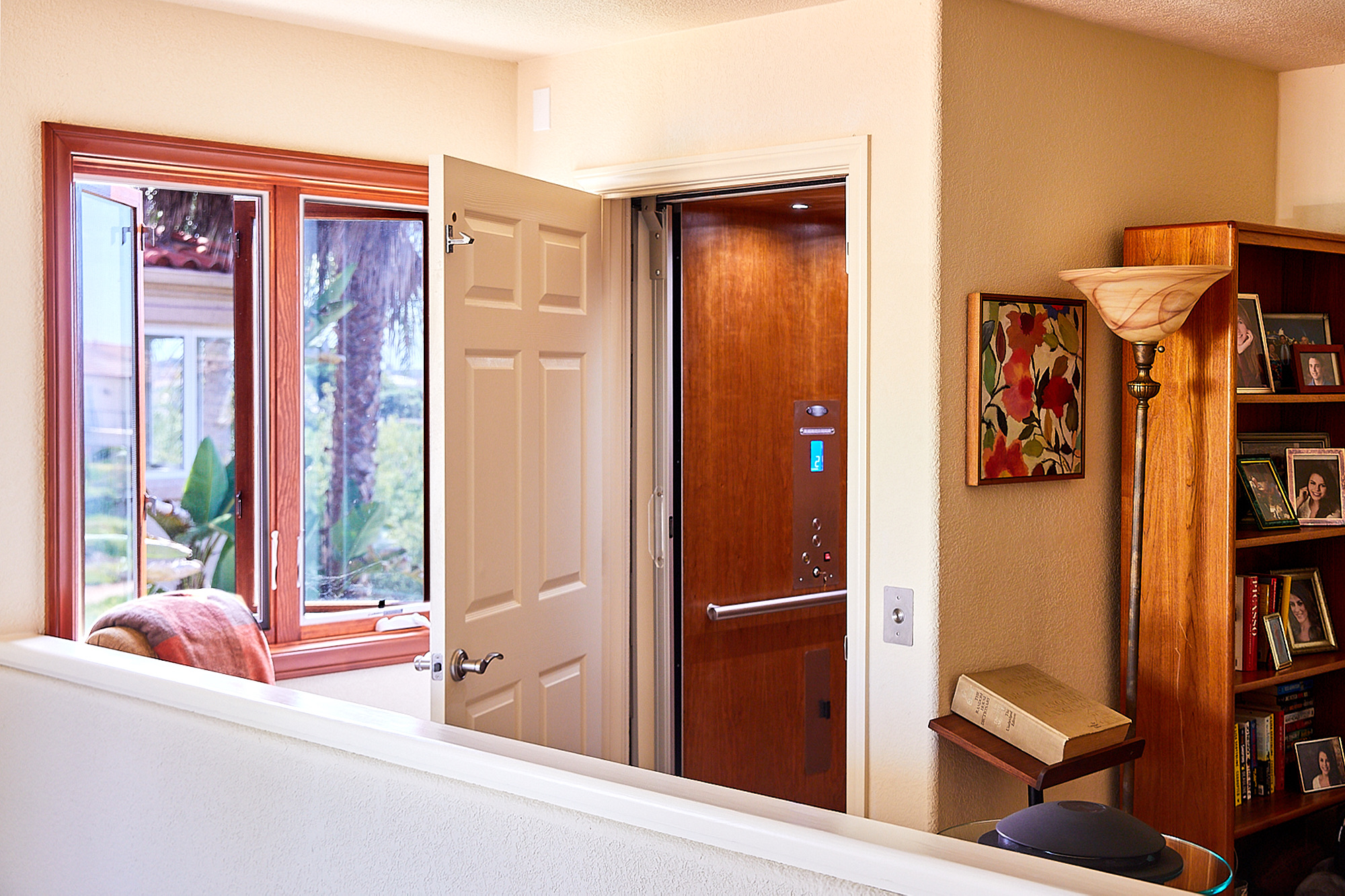
Technician checking the safety circuit
Child safety around home elevators
The short answer
What we check
What to do next
What the CPSC says about the door gap
On January 11, 2022 the CPSC announced recalls of residential elevators made by Savaria, Inclinator and Bella. Together they covered roughly 69,000 units. In September 2022 a settlement with TK Access (formerly ThyssenKrupp Access) led to another recall of home elevators for the same entrapment hazard. The CPSC also issued a separate warning about Waupaca elevators, whose manufacturer is no longer operating.
The remedy named in those recalls is a free space guard from the manufacturer, or an electronic monitoring device. The CPSC publishes its own guidance on how big a gap is acceptable, and we follow that guidance rather than repeating a number from memory. If you want an exact measurement for your elevator, our technician measures the gap on request and tells you where it stands.
Rental homes and vacation homes matter too. The CPSC specifically urged people to check residential elevators at rental properties. If you rent a house with an elevator in San Diego or Orange County, ask the landlord whether the fix was done. If you own a short-term rental, make this a priority. Our guide to home elevator insurance and liability explains why.
Space guards, step by step
A space guard fills or covers the gap so a child cannot stand in it. It is usually a panel or bar fitted to the car door or the landing frame. The manufacturer supplies it, and for recalled models it is free. A technician fits it, adjusts it so it does not interfere with the doors, and tests the elevator afterward.
Some systems add an electronic monitor that detects a person in the gap and stops the car from moving. Which option is right depends on your brand, your doors and your layout. We will tell you what the manufacturer offers and what we recommend for your home. Ask us whether the guard is on your list of recalled models, and we can contact the manufacturer for you.
Brands and models to check first
Start with the recall notices for Savaria (including Eclipse and Infinity and some older model names), Inclinator, Bella, TK Access and Waupaca. The model or serial plate is the key. Where it sits varies: the CPSC says Savaria’s model name is on the controller, and Inclinator’s serial number can be on the controller, stamped on the rails, or on the outside of the drum. Our page on how to identify your elevator brand helps you find it, and our elevator brands we service pages show what we know about each maker.
Absence from the January 2022 recalls does not make a brand automatically safe. Any elevator with a wide gap between doors deserves a look. We check every brand the same way.
Habits that keep kids safe
Hardware fixes are the foundation, but daily habits matter just as much.
- Supervise. Treat the elevator like a staircase for a toddler. Children should not ride alone, and there is no official age for riding unsupervised, so use your judgment and keep supervision for younger kids.
- No playing. The elevator is not a toy, and the doors are not a hiding place.
- Keyed operation. Many elevators have a key switch that disables the call buttons. Use it when you are away or when a young child is visiting. Keep the key out of reach.
- Close landing doors. Make it a habit to shut the landing door after every use.
- Never reach into gaps. Teach kids not to put hands, feet or toys near door edges or the gap.
- Know the stop button. Older children and caregivers should know where the stop button, alarm and phone are. Our guide on what to do if you are stuck covers the steps.
What our technician checks on a child-safety visit
On a visit focused on children, we do more than measure. We confirm that each landing door locks before the car moves, that the car gate switch makes contact, and that the door interlocks work as designed. We check the stop button, the alarm and the emergency phone. We ask about the household: how old the children are, whether grandchildren visit, whether a short-term rental guest might use the elevator. Then we recommend the right combination of hardware and habits. If you already have a space guard, we test that it is secure and has not been bent or removed.
For a full condition check, see our residential elevator inspection page, or our maintenance plan, which includes safety-device testing at each visit. If you are buying a home, read buying a house with an elevator and ask the seller for recall repair records.
Frequently Asked Questions
How safe are residential elevators?
A properly installed and maintained residential elevator is a safe way to move between floors. The known risk for children is the gap between the landing door and the car door or gate, which the CPSC has addressed through recalls and space guards.
Is the gap between the hoistway door and the cab door dangerous for kids?
It can be. In some elevators a small child can stand in that gap without the elevator detecting them. The fix is a space guard or an electronic monitoring device, and our technician can measure your gap.
How do I childproof a home elevator?
Install the manufacturer’s space guard if your model needs one, use keyed operation when you are away, keep landing doors shut, and keep young children from playing in or around the elevator. A technician can check all of these.
At what age can children ride a home elevator alone?
There is no official age. Most safety guidance recommends supervising younger children. Use your own judgment, and make sure the door-gap hazard has been dealt with first.
Is my elevator part of the CPSC recall?
If it is a Savaria, Inclinator or Bella elevator, or one made by TK Access, it may be. We can identify the brand and model and tell you which notice applies.
What should I do if I suspect my elevator has a dangerous gap?
Stop children from using it and call a licensed elevator contractor. We can measure the gap and order the correct space guard. Call (833) 865-7887.
Want the door gap measured?
A technician will measure it and tell you what fix fits your elevator. Call (833) 865-7887.




