
Home Elevator Maintenance Explained: What a Visit Includes and How Often
Visits, Schedules, Warranty and Contracts
The worry behind the question: what does this cost, and am I getting trapped?
Owners ask about maintenance for two reasons. They want to know what the yearly bill looks like, and they are afraid of signing something they cannot get out of. One homeowner on a public forum put it as a warning: a big elevator company had given them no way out of the maintenance contract. Another said the yearly bill was fine until a recall landed. These are real fears, so this guide answers them head on.
The short version is this. A home elevator needs a trained technician to go through it once or twice a year. The visit is mostly inspection, cleaning, adjustment and testing of the safety devices, plus small wear parts. You do not need a long contract to get it. At Advantage Elevator we do not lock owners into multi-year agreements, and you can decide each year whether to continue.
We service every major residential brand, so you do not have to have bought your elevator from us to use us. If you already know you want a plan, the details live on our elevator maintenance plan page.
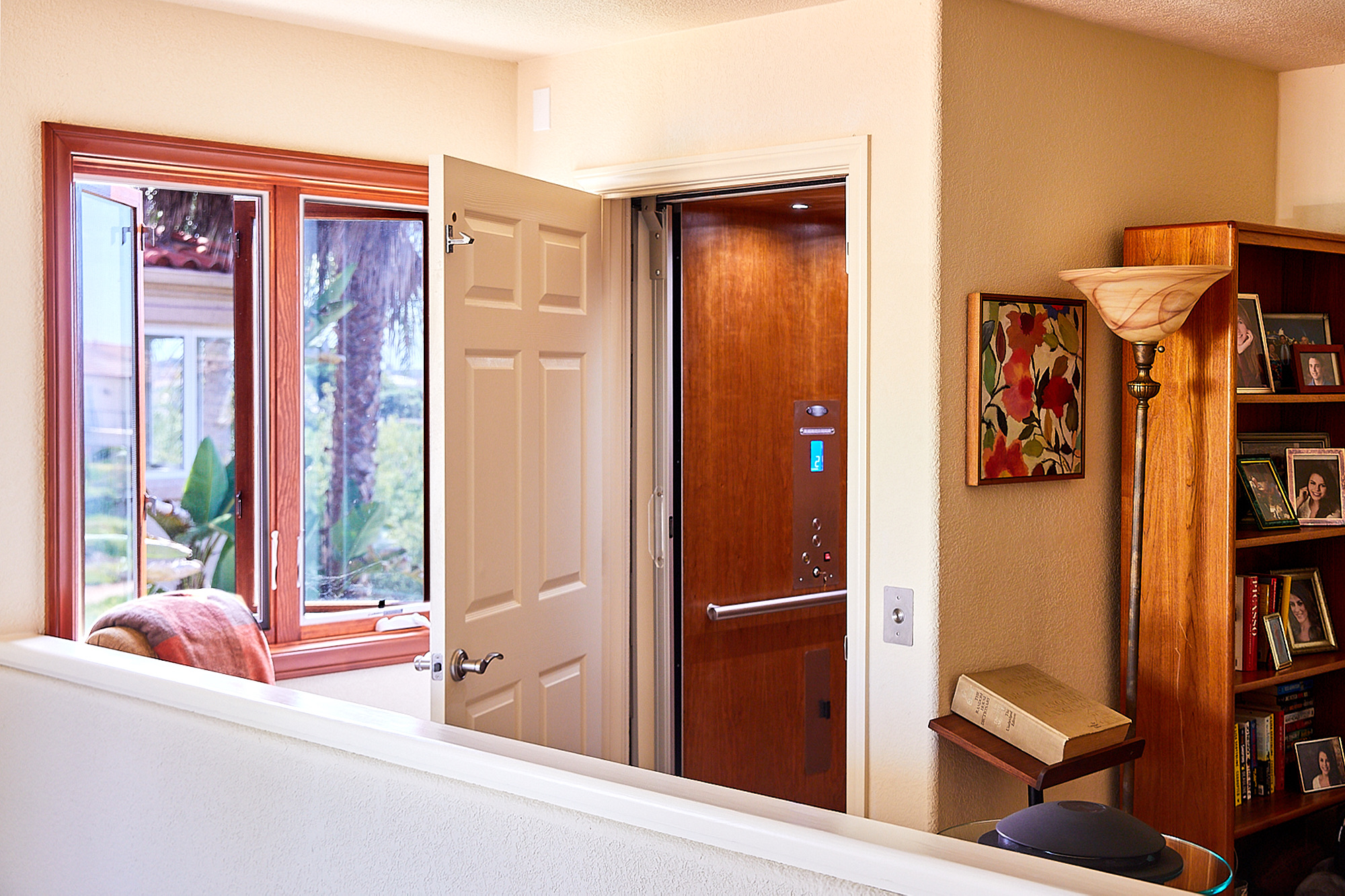

Controls behind framed art
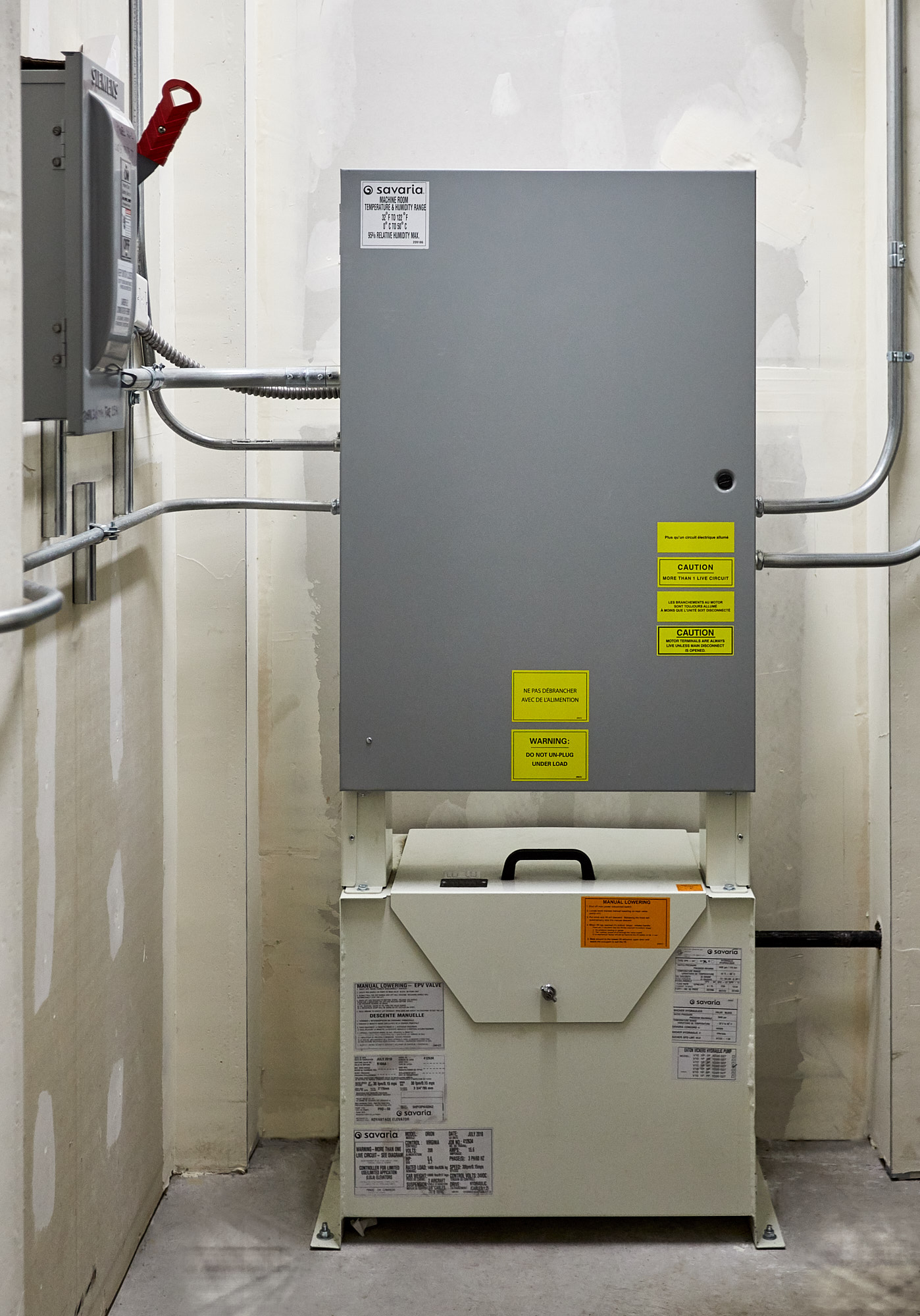
Hydraulic unit service

Advantage Elevator service team
Maintenance at a glance
The short answer
What we check
What to do next
What a maintenance visit includes
A good visit is not someone wiping down the cab. The technician works through the elevator in a set order, and the list below is what we cover on a typical residential unit.
- Doors and gates. Landing door interlocks, car gate switches, door tracks and closers. These cause most call-outs, so they get the most attention.
- The drive. On a hydraulic unit, the pump, valve, fluid level and any weeping fittings. On a traction unit, the chain or cables, sheaves and brake. On a drum unit, the drum, cables and grooves.
- Rails, rollers and guide shoes. Wear, alignment and lubrication.
- The controller and safety circuit. Connections, relays, fault history and every safety device. This is the part you cannot judge by riding in the car.
- Battery lowering and lighting. The system that brings the car to a landing and opens the door in a power outage. We test it under load, because a weak battery looks fine until the lights go out.
- Leveling and ride quality. The car should stop flush with each floor and ride without new noises.
- Alarm and phone. A car that traps you but cannot call anyone is the worst case.
- The pit and machine space. Water, debris, corrosion and anything stored where it should not be.
You get a plain report afterward. If something is wearing, we tell you what it is, how urgent it is, and what it would take to fix it. We do not start repair work without your approval.
How often does a home elevator need service?
Once a year is the baseline. That is what most manufacturers expect and what keeps a warranty intact. Think of it like the annual service on a furnace or a car, except the thing you are protecting is something you ride in.
Twice a year is smarter near the coast. Homes in places like La Jolla, Encinitas, Carlsbad, Newport Beach, Laguna Beach and Huntington Harbour sit in salt-laden, humid air. We see corroded door contacts and pitted relay points far sooner there than inland. Cleaning and checking the door and safety contacts every six months catches the problem before the elevator stops. If you are within about a mile of the water, pick the twice-yearly schedule.
More often for heavy use. A household that rides all day, a home with a wheelchair user, or an elevator that serves four or five stops will wear parts faster. Tell us how you use it and we will recommend a schedule.
Between visits, you are the early warning system. A slower door, a new noise or a car that stops a little off the floor is worth a phone call. Our troubleshooting guide tells you which problems are safe to check yourself and which are not.
Warranty: why maintenance is required
Manufacturer warranties on residential elevators generally depend on regular maintenance by a qualified provider. Savaria, for example, covers defective parts through the local dealer and requires the elevator to be maintained on schedule. Skip the service and you can lose the coverage when you need it most.
Our maintenance plans satisfy that requirement for most manufacturer warranties. If you have a warranty question about a specific brand or model, bring us the paperwork and we will read it with you. We would rather you know before something breaks than after.
The plan, the rate and the contract worry
Our maintenance plans come in annual and bi-annual versions. Each includes a full inspection, safety-device testing and priority scheduling when you call. Plan members also get a reduced service rate: $550 per visit instead of $600. That is the only dollar figure we put on this page, because everything else depends on your brand, number of stops and condition, and we quote that after a free in-home visit.
Now the honest answer to the lock-in question. We do not require a long-term contract. You are not signing away five years. You can see how the first visit goes, see how we treat you and your elevator, and decide each year whether to continue. If you ever want to leave, you leave.
Two things worth knowing if you are comparing providers. First, ask any company whether the agreement renews automatically and what the cancellation terms are, in writing. Second, ask whether you can use another provider for repairs. Some agreements are written so that you cannot. Ours are not.
We handle plans for both counties. See the pages for San Diego County and Orange County.
What maintenance does not cover
Maintenance keeps wear under control. It does not turn old parts into new ones. If a visit finds a failing door operator, a tired controller or a leaking seal, that is a repair, and you will get a separate written quote before we begin.
It also does not replace a recall remedy. Several residential elevator makers have had recalls over a child-entrapment gap between the landing door and the car door or gate. The fix is a free space guard from the manufacturer or an electronic monitoring device. Ask your technician to check this on every visit if you have children or grandchildren around. Our child safety guide explains the issue.
And it does not tell you how many years your elevator has left. For that, read how long home elevators last, or ask for a condition report. If you are buying a house that already has an elevator, a residential elevator inspection is the right first step.
Frequently Asked Questions
How often should a residential elevator be serviced?
At least once a year. Close to the coast, twice a year is better, because salt and humidity corrode door and safety contacts. Heavy use or a wheelchair user can also justify more frequent visits.
What is an annual maintenance contract for elevators?
It is an agreement for a trained technician to inspect, lubricate, adjust and test your elevator on a set schedule. Ours is an annual or bi-annual plan with priority scheduling and a reduced service rate, and it does not tie you to a long-term contract.
What does a home elevator maintenance visit include?
Doors and gates, the drive or pump, rails and rollers, the controller and safety circuit, battery lowering, leveling, the alarm and phone, and the pit and machine space. You get a plain report, and we do not start repairs without your approval.
Do I have to use a maintenance plan to keep my manufacturer warranty?
Most manufacturer warranties require regular maintenance by a qualified provider. Our plans satisfy that requirement for most warranties. Bring your warranty paperwork and we will go through it with you.
Will I be locked into a long contract?
No. We do not require long-term contracts. You can decide each year whether to continue, and you are free to leave. Ask any provider for the renewal and cancellation terms in writing before you sign.
What does the maintenance plan rate save me?
Plan members pay $550 per visit instead of $600, and they get priority scheduling when something goes wrong. Repairs and parts are quoted separately after a free in-home visit.
Ready to put your elevator on a schedule?
Plans for San Diego and Orange County, no long-term contract. Call (833) 865-7887.




