
Aging in Place: How to Stay in Your Home for the Long Run
Plan Early, Stay Longer
Staying in the home you love, for as long as you want
Most people would rather stay in their own homes as they age. They know the neighbors, the doctors, the grocery store and the sound of the house at night. The trouble is that most homes in Southern California were not built for a body that is eighty, or for a knee that is tired. Stairs are the usual first problem, and they are the one a lift can solve.
The real question is not whether a lift is possible. It is when to plan, what to choose, and how to avoid making a big decision in a hospital hallway. We talk with homeowners and their families every week about exactly this, and the pattern is clear: the families who plan early spend less time worried, make calmer choices and keep more control.
This guide is for you if you are in your sixties or seventies and thinking ahead, or if you are the child of someone who is. We cover when the right time is, how single-story and multi-story homes differ, which kind of lift fits which stage of life, and what we see across our two counties. We are a licensed California elevator contractor (CSLB C-11 #1027832) and a Savaria Elite dealer. We also install Stiltz and Cambridge Elevating products.

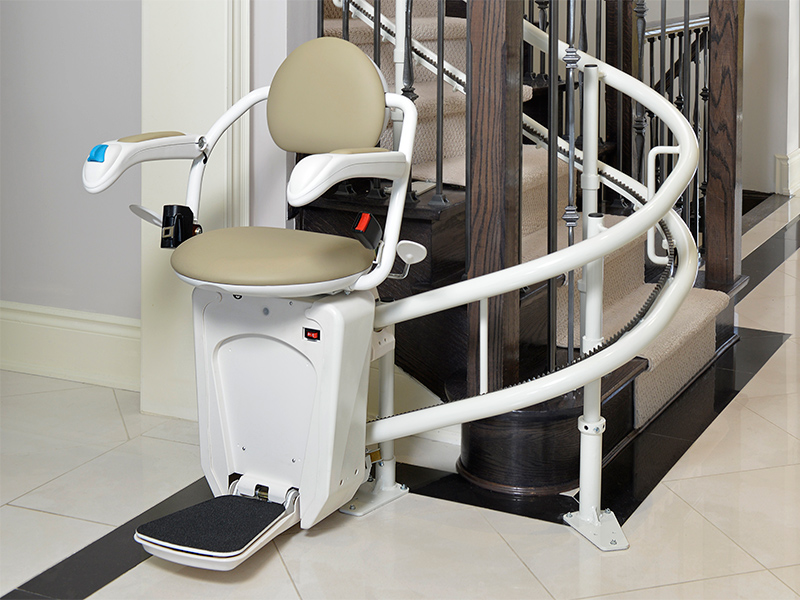
Curved stairlift

Vertical platform lift at an entry

Elevator in a modern home
Staying put, in three steps
The short answer
What we check
What to do next
When is the right time to act?
People wait for a crisis because the stairs still work. Then a fall, a surgery or a diagnosis arrives, and the decision has to be made in a few weeks. Installation takes planning, a city permit and some construction, so the fast path is not always fast.
Plan when any of these appear: you avoid the second floor, you hold the rail with both hands, you have a procedure coming up, a spouse has health problems, or you have started thinking about moving only because of the stairs. Planning does not mean installing. It means knowing what would work, what it would involve, and what it would take, so that a future decision is a short one. A free visit and a written quote give you that.
If your parents are the ones aging, see our guide on home elevators for aging parents for how to start that conversation.
Single-story or multi-story: what changes
A single-story home looks like the safest bet, and often it is. There are no stairs to climb inside. But even ranch homes in Southern California have a step at the front door, a sunken living room, a split-level backyard or a steep driveway. A small platform lift or a ramp can solve those, and our wheelchair lifts are made for exactly that kind of rise.
A multi-story home asks more. Bedrooms upstairs, laundry in the basement, or a hillside house with the garage at street level all mean daily trips up and down. Families who love such a house often decide to keep it and add a lift rather than move. That can be a sound choice, especially when the neighborhood, the schools and the neighbors are part of the value.
Moving to a single-level home is a legitimate answer too, and we will tell you if it is the better one. The honest test is simple: if you can picture yourself in this house at eighty-five, with a lift, then plan the lift. If you cannot, that is a useful answer as well.
Which lift fits which stage
Think of it as a ladder. You climb it only as high as you need.
- Early stage: steady but tired. A stairlift on a straight or curved stair is quick to fit, costs far less than an elevator and is easy to remove later.
- Middle stage: a walker, a cane, or stairs that are a daily risk. A through-the-floor lift or a compact shaftless home elevator carries a person and some of the groceries, and does not require a full hoistway.
- Later stage: a wheelchair or a caregiver. A full-size home elevator with a larger cab gives room for a chair and a helper. See our wheelchair guide for sizes.
- Short rises outside or between levels. A platform lift handles a step, a porch or a garage rise.
If you may need the larger lift later, it often makes sense to plan the space now, even if you start with something smaller. We can show you where the shaft could go and what it would involve. Our stairlift versus elevator guide covers the trade-off in detail.
What we see across Southern California
The counties we serve skew older than the national picture in several coastal cities. In the 2020 Census, about 30 percent of Del Mar residents were 65 or older, about 30 percent in Rancho Santa Fe, about 26 percent in Laguna Beach, about 24.5 percent in Dana Point and about 24 percent in Newport Beach. Those are the highest shares among the cities we have looked at, and they are places full of multi-level homes on hillsides and bluffs.
That is not an accident. Many coastal homes are built on steep lots, with the garage and entry on one level and the bedrooms several levels away. People bought them when they were forty, and they are now past seventy. Many want to stay. We see the same pattern in older tract neighborhoods in inland Orange County, where two-story homes built in the 1970s and 1980s have original owners who plan to remain.
You can read about our work in specific cities on the pages for Del Mar, Rancho Santa Fe, Laguna Beach, Dana Point and Newport Beach.
Planning before the crisis: a short checklist
Spend an hour on this. It saves weeks later.
- Walk the house at the end of the day, when you are tired, and note every step and stair.
- Check where the bedroom, bathroom and laundry are. A bedroom and a full bath on the entry level helps a lot.
- Ask your doctor or a physical therapist what you can expect in the next few years.
- Get one free in-home visit and a written quote, so you have a plan on file.
- Read about paying for a home elevator and talk to your tax professional.
- Tell your family what you want. Put it in writing if that helps.
Whatever you choose, keep it serviced. A lift that stops working at the wrong moment is worse than none. Our maintenance plan covers inspection, safety testing and priority scheduling.
Frequently Asked Questions
Are home elevators worth it for aging in place?
For many families, yes, especially in a multi-level home they want to keep. The value is in staying in a familiar house, and removing the daily stair risk. For others a single-level home is the better path. We help you compare.
What is the best time to install a home lift?
While you are still well. Installation takes planning and a city permit. If you wait for a crisis, you decide under pressure. A free visit and a written plan make a later decision short.
Is a single-story home better for aging in place?
Often, but not always. Even single-story homes can have steps, sunken rooms or steep driveways. A platform lift or ramp can fix those, and a multi-level home with a lift can work well too.
What can seniors do instead of a stair lift?
Options include a home elevator, a through-the-floor lift, a platform lift for short rises, moving the bedroom to the main floor, or moving to a single-level home. The right choice depends on the person and the house.
Which kind of lift is best as my needs change?
A stairlift suits early needs, a compact home elevator suits a walker, and a larger cab suits a wheelchair. If you may need the larger one later, plan the space now. We can map it on a free visit.
How do I plan for aging in place before there is a crisis?
Walk the house when you are tired, note the trouble spots, talk with your doctor, and get a free in-home visit and a written quote. Tell your family what you want. Then you have a plan ready.




