
Outdoor Elevators, Condos, Townhouses and HOAs: When It Can't Go Inside
Weather, Salt Air and HOA Approval
The worry behind the question: will the weather, the neighbors or the association stop this?
Some people have no room inside. The staircase is steep, the floor plan is tight, or the entry is up a flight of steps from the driveway. Others live in a condo, a townhouse or a house in a community with an association, and they suspect the answer to “can I put in a lift?” will be a letter from the board. A third group is building or converting an accessory dwelling unit and wants to know what the rules are.
The worries are the same in each case: weather, security, approval, and whether the whole idea is even allowed. Here are the plain answers, including the parts that depend on facts we cannot know until we see the property.
Short version: yes, there are lifts built for outdoor use, and yes, condos, townhouses and ADUs can often get one, but a coastal location, an association and a city building department all add steps. We handle the building permit coordination with your city’s building department, and we will tell you early if something looks like a problem. Free in-home estimates are available across San Diego County and Orange County.


Vertical platform lift at an entry

Enclosed platform lift
Elevator in a townhouse
Outside, condo or ADU at a glance
The short answer
What we check
What to do next
Can a home elevator go outside?
It depends on what you mean by elevator. A traditional home elevator is designed to live inside the house, in a hoistway built into the structure. Putting one outside is a different project, and it is not one to promise from a brochure.
What does go outside is a vertical platform lift, which is a platform that carries a person, often in a wheelchair, up a few feet between two levels. It suits porches, decks, entries up a half flight of stairs and garage-to-house steps. Several Savaria platform lifts are listed for both indoor and outdoor use. In the V-1504 family, the Lux, Standard and Enclosure models are listed for indoor or outdoor use, and the Prestige is indoor only. The Multilift is also listed for indoor or outdoor installation. The V-1504 is a 750-pound hydraulic lift on a household 120-volt circuit, and enclosure options are available for added protection from the weather. See the V-1504 and its siblings on our wheelchair lifts page.
There are also stairlifts with outdoor packages. The Savaria K2, for example, has an outdoor package with stainless rack, UV-resistant seat, weather cover and upgraded battery, for moderate climates. Southern California is moderate in most places, and the coast is where the extra care goes. See our stairlifts page.
If you want more than a few feet of rise, or a full cab to the second floor, the honest answer is that you probably need an indoor elevator or a purpose-built enclosure designed with an engineer. We will tell you which way your site points.
Salt air, sun and what coastal weather does to a lift
If you live near the water, weather is not an abstract concern. Salt in the air settles on metal, creeps into electrical contacts and finds every unsealed seam. Sun fades seats and brittles plastic. Marine layer moisture sits for days on shaded north and west sides of a house.
What we recommend for outdoor and coastal installations:
- Choose an outdoor-rated model, not an indoor-only one. The Prestige is for inside. The Lux, Standard and Enclosure are listed for outside as well.
- Consider an enclosure. It reduces direct exposure to rain, sun and salt, and it adds privacy and security.
- Service it more often. Coastal owners should plan on inspection twice a year. We check contacts, fasteners, seals, finish and the battery. See home elevator maintenance explained.
- Rinse and cover as the maker advises. A simple habit of rinsing salt off exposed surfaces is the cheapest prevention there is.
- Protect the power connection. Outdoor wiring, disconnects and outlets need weather-rated components, installed to your city’s electrical requirements.
We have no elevator-specific coastal lifespan figure we would call proven, so we will not offer one. What we do see in service is corroded interlock contacts and pitted relays near the water, much sooner than inland. That is the reason for the twice-yearly rule.
Condos and townhouses
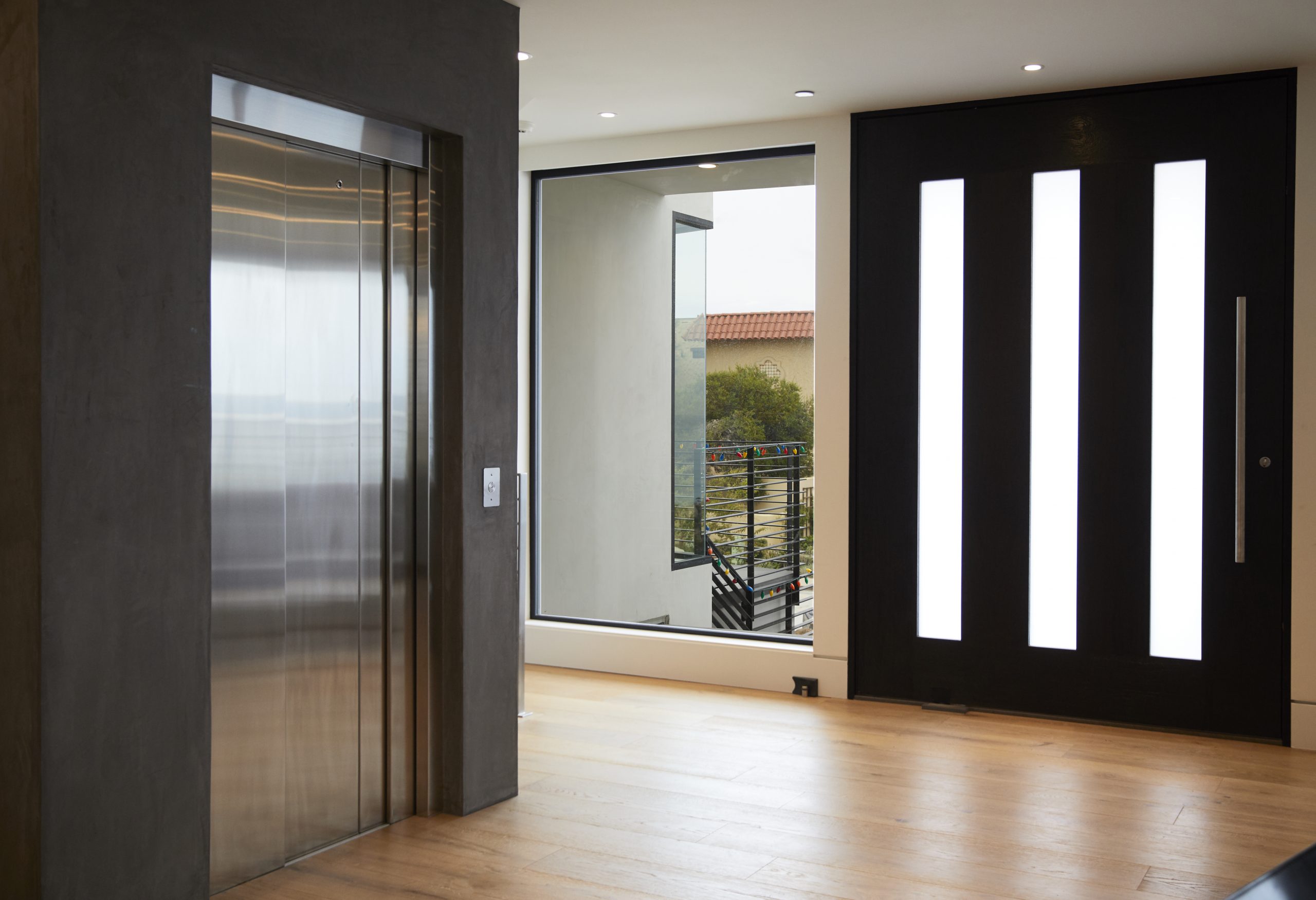
Townhouses. Many townhouses have their own stairs between floors and no neighbor above or below the staircase. That is often a good candidate for a through-floor lift or a compact home elevator inside the unit. The practical questions are the floor plan, the structure, and what your association’s documents say about alterations.
Condominiums. This is harder. If you own a flat in a building and your unit is a single level, you probably have no need for a lift. If you own a two-level unit, an elevator inside your own space is possible in principle. But floors, ceilings and walls between units may be shared structure, and your association usually owns the exterior and common elements. We will not cut anything that is not yours. A visit is the only way to know.
In both cases, expect these steps: read the covenants and rules, ask what the association requires for an interior modification, check structure and power, and file the city building permit. Our retrofit guide covers the same questions for single-family homes, and the shaftless home elevators page explains the options that need no hoistway.
HOAs and architectural review
Associations usually care about three things: how it looks from the street, what it does to the structure, and who is responsible later. A lift inside a unit rarely worries a board. A lift on a front porch or a visible deck does, and the board may ask for drawings, color samples and a contractor’s license and insurance.
Here is how to approach it:
- Read the governing documents first. Find the section on architectural changes and exterior modifications.
- Submit a clear package. Photos of the site, a scale drawing, the product specification, the finish and color, and your contractor’s CSLB C-11 license number. We provide the contractor information and product documents.
- Ask for the decision in writing before work starts.
- If the lift is for a disability or medical need, tell the board that. California and federal housing law can require an association to consider a reasonable modification request for a person with a disability. We are elevator contractors, not lawyers, so talk to a housing attorney or a fair housing organization if you meet resistance.
We do not decide your association’s rules, and we will never claim a specific association’s position. We will help you ask the right way.
ADUs and accessory dwellings
Accessory dwelling units are a growing reason for lift calls in San Diego and Orange County: an apartment over a garage for an aging parent, a second-story granny flat on a hillside lot, a converted basement. The common thread is that the person who needs the unit is often the person who cannot manage a staircase.
The advice is simple. Plan the lift while you are planning the ADU. Adding a hoistway, a landing or a through-floor opening in the design stage is far easier than cutting into a finished building. A shaftless or through-floor lift can suit a small footprint, and a compact elevator can work if the plans make room. Your city’s building department reviews the permit, and we coordinate that with them. Ask us for dimensions and power requirements early, so your designer can draw them in.
If the ADU is for a parent, you may also like our guide on home elevators for aging parents.
Frequently Asked Questions
Can a home elevator be installed outside?
A traditional home elevator is built to live inside the house. What goes outside are outdoor-rated vertical platform lifts, such as the Savaria V-1504 Lux, and stairlifts with outdoor packages. We will tell you what fits your site.
Does an outdoor lift need an enclosure or weather protection?
Not always, but near the coast we recommend one. An enclosure reduces rain, sun and salt exposure and adds security. Choose an outdoor-rated model and plan on more frequent service.
Can you install an elevator in a townhouse?
Often yes. If the unit has its own stairs and no neighbor above or below, a through-floor lift or a compact home elevator can work. You will need your association’s approval and a city building permit.
Can condos have elevators?
Sometimes. A two-level condo may fit a lift inside the unit, but shared floors, walls and common elements belong to the building. We assess the structure, and you ask the association for approval before work begins.
Do I need HOA approval for a home lift?
Check your governing documents. Anything visible from outside, or touching structure, usually needs architectural review. If the lift is for a disability, tell the board, and talk to a housing attorney if you meet resistance.
Can I put an elevator in an ADU?
Yes, and the best time to plan it is during design. A lift or elevator that is drawn into the plans is far simpler than one added later. We coordinate the building permit with your city’s building department.
Not sure it will fit your site or your HOA?
We measure, advise and help with the paperwork. Free in-home estimates. Call (833) 865-7887.




