
Can You Add an Elevator to an Existing Home? A Southern California Retrofit Guide
What Fits, Where It Goes, What to Expect
Will my house actually take an elevator?
Most homes can. That is the short answer, and it is the answer we give after walking through hundreds of houses in San Diego and Orange County that were built long before anyone thought about an elevator. The real worry behind the question is usually bigger than the question itself. Homeowners tell us, and say in online forums, that they fear two things: that a 30-year-old house will not be able to take the weight and the opening, and that the project will tear walls apart and cost twice what anyone said at the start.
Both worries are fair. Both are manageable once you know what decides the answer. This guide walks through what makes a house a good candidate, where the elevator usually goes, which kinds of elevator suit an existing house, and what the construction actually looks like. It also says plainly when an elevator is the wrong tool.
Advantage Elevator is a Savaria Elite dealer and a licensed California elevator contractor (CSLB C-11 #1027832), with more than 20 years of retrofit work. We also install Stiltz and Cambridge Elevating, so we can compare several approaches for one house instead of fitting every house to one product.
- Free in-home visit to look at stairs, closets, framing and your electrical panel
- Several drive types quoted side by side so the choice fits the house
- 4.9-star rating across more than 300 Google reviews

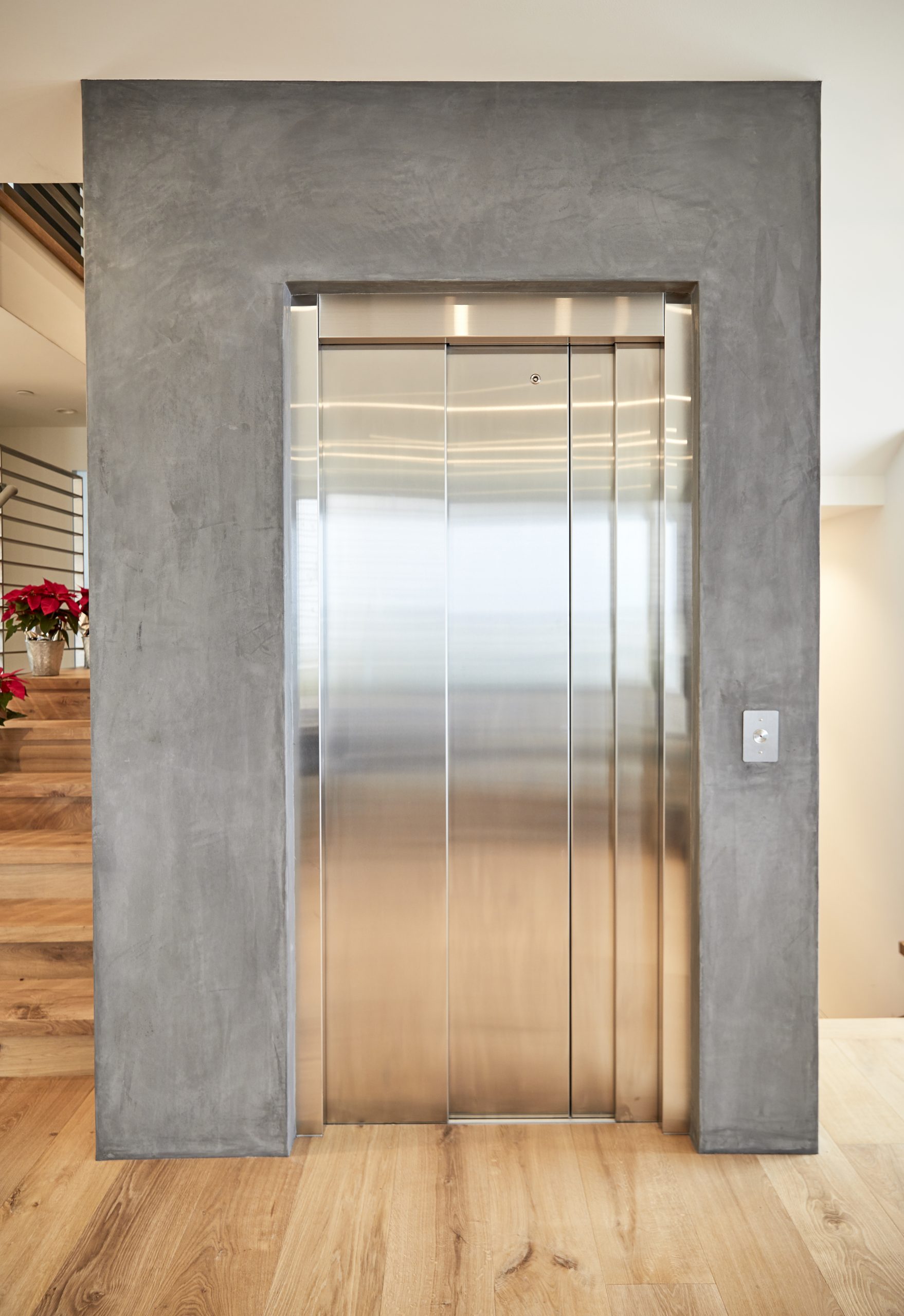
Finished retrofit elevator in a modern home
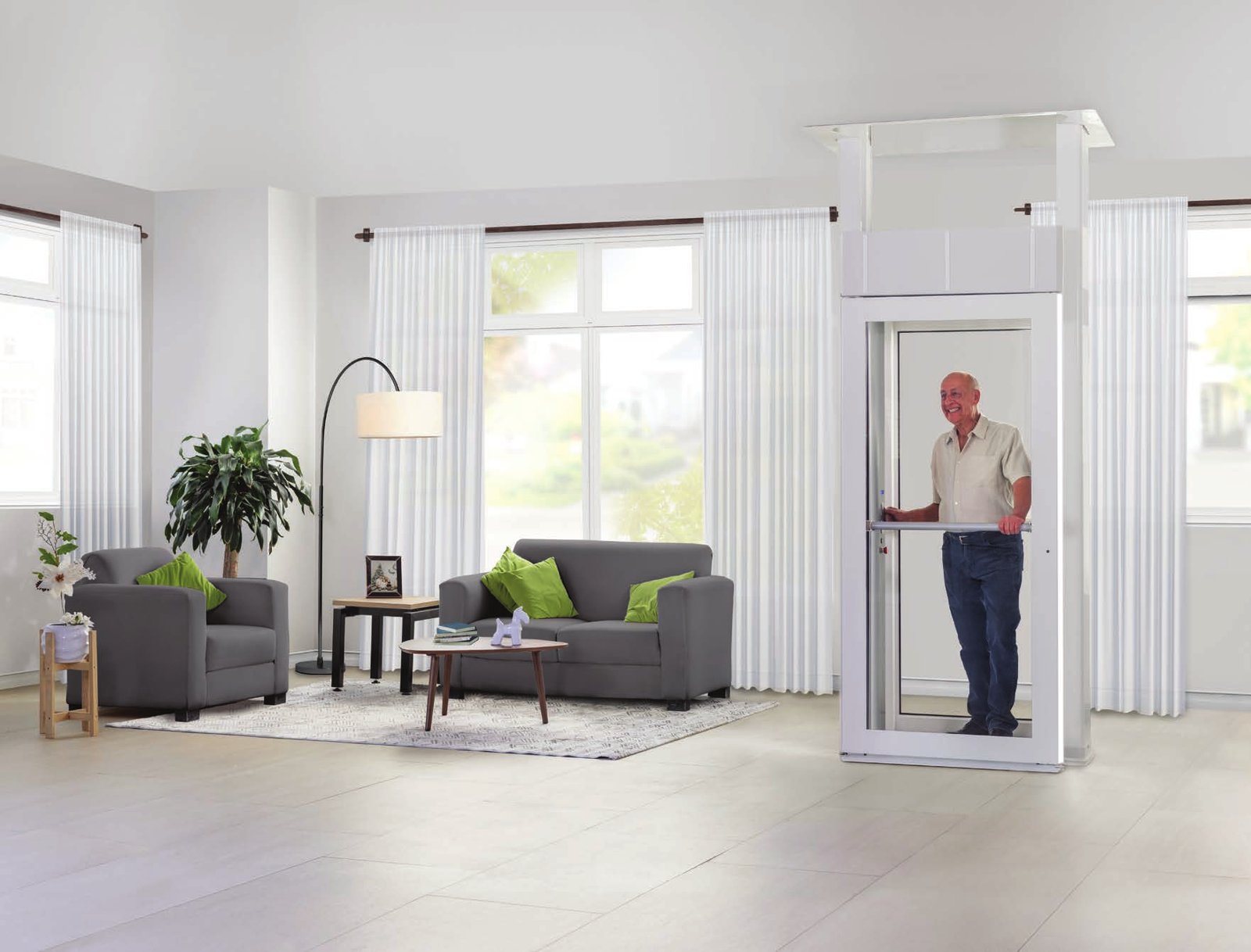
Shaftless Savaria Luma lift
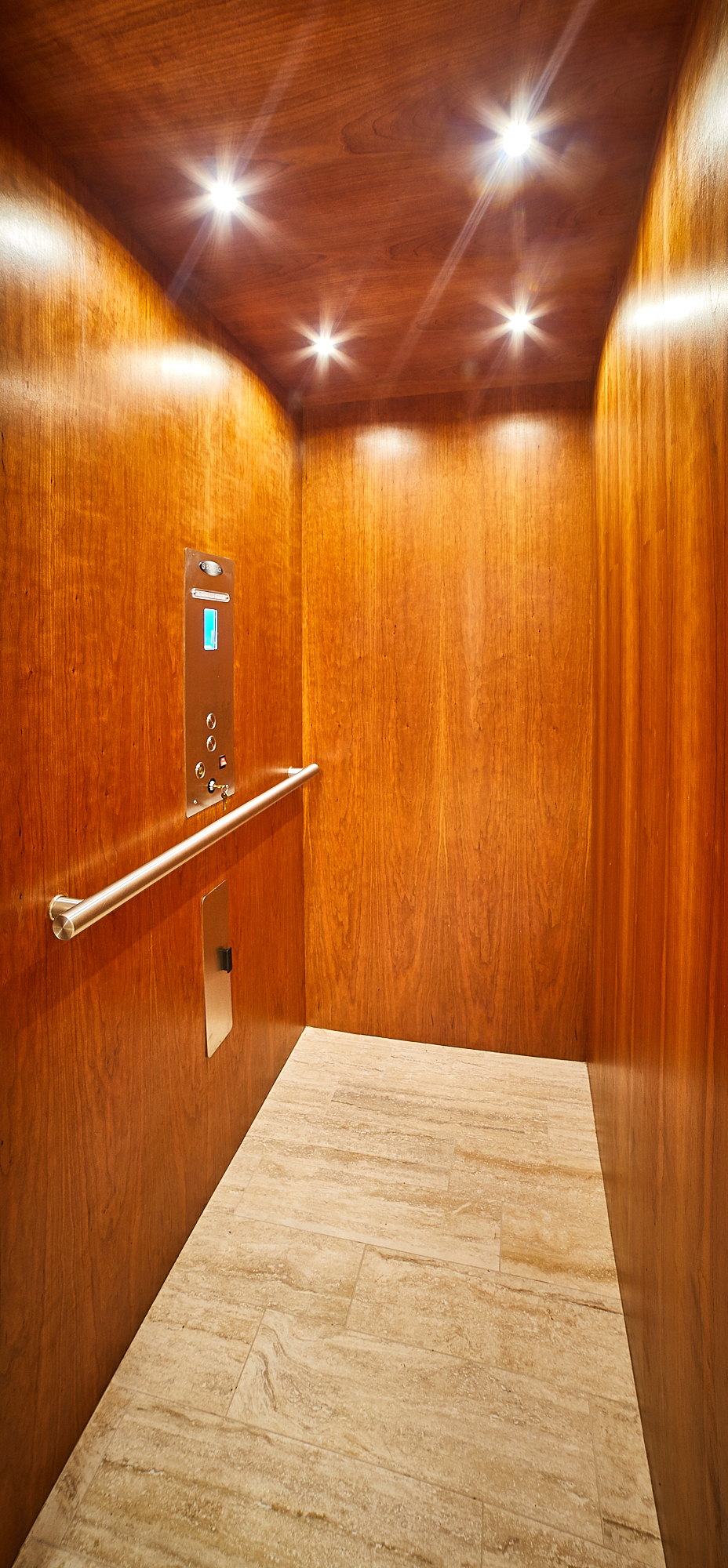
Wood cab retrofit
The short version
The short answer
What we check
What to do next
What decides whether your house can take one
Four things matter more than the age of the house.
1. Stacked space. An elevator is a vertical tube. It needs a column of space that lines up from the bottom floor to the top floor. Houses almost always have one somewhere: a closet that sits over another closet, a pantry above a garage corner, a pair of rooms that share a wall line, or a spot beside the stairs. Finding that column is the first thing we do on a visit.
2. Ceiling height at the top. Traditional elevators need clearance above the top landing for the car to travel. The Savaria Eclipse, for example, lists a minimum overhead of 96 inches. Most two-story homes meet that without trouble, and where a house is tight, a different model may fit better.
3. What is under the bottom landing. Some elevators sit in a shallow pit below the lowest floor. Others need no pit at all. In a house on a concrete slab, that difference matters a great deal, and we cover it in our guide to slab foundations, pits and basements.
4. Power. Every home elevator needs its own electrical circuit, and the type you choose sets the requirement. A panel that is full, or a long run from the panel to the shaft, adds work. It is one of the items people forget to ask about; see our guide to the hidden costs of a home elevator.
Where the elevator usually goes in an existing house
We see the same handful of locations again and again in Southern California homes.
- Stacked closets. The most common retrofit. A closet on the first floor and a closet directly above it become the elevator column, and the homeowner gives up two closets, not a room. One homeowner on a design forum described doing exactly this with three closets stacked in a row.
- Next to the staircase. The stairs already cut through the floor, so the opening above is often easier to frame. This works well in split-level and hillside homes in Laguna Beach, La Jolla and Anaheim Hills.
- Garage corner or entry. In hillside homes where the garage is the lowest level, an elevator can start at the garage and rise through a pantry, a laundry or a hallway to the living floor and bedrooms.
- A room corner. Sometimes giving up a corner of a spare bedroom or a family room is the best choice. A round or octagonal glass shaft can make that corner look like a feature.
- A new addition. When no interior spot works, a small addition off the side of the house can hold the shaft. This needs more design and review, but it leaves the existing floor plan alone.
For sizes, see our guide to how much space a home elevator needs.
Which type of elevator suits an existing house
The type of elevator changes how much of the house you open up. We usually compare these.
Shaftless and self-supporting units. These bring their own hoistway or ride in a compact frame, so less of your house is rebuilt. The Savaria Vuelift is a panoramic, self-supporting lift with a factory-built shaft. Stiltz makes compact shaftless lifts built in sections that go through ordinary doorways, which helps when the house is hard to access. See our page on shaftless home elevators.
Through-floor lifts. The Savaria Telecab and Luma travel between two floors through an opening cut in the floor, with no separate shaft. They suit a single rise, and they carry a smaller load than a full elevator. See Telecab and Luma.
Machine-room-less traction elevators. The Savaria Eclipse and Zenith have no machine room, which is a big advantage in an existing home because you only need a closet or utility space for the controller. See the Eclipse and the Zenith.
Hydraulic elevators. The Savaria Infinity is hydraulic and needs a machine room of roughly 4 feet by 5 feet for the tank and controller, usually in a basement or a utility area. If your house has that space, hydraulic is a solid choice. If it does not, a traction model usually fits better. See the Infinity.
Our guide to types of home elevators compares them in more depth.
What the construction actually looks like
This is the part people dread, so we describe it honestly. An elevator added to a finished house is a construction project, not an appliance delivery. It is also much more contained than most people picture.
First, the shaft location is marked and the structure is reviewed. If the opening cuts through floor framing, an engineer details the framing around it. Then a framing crew opens the ceiling and floor at the shaft location, builds the shaft walls, and patches around them. Electricians run the elevator circuits. Our technicians then set the rails, the car, the drive and the doors. Finally, the shaft is finished with drywall and paint, the landings get flooring, and we test and commission the unit with your city’s inspector.
Most of the mess is confined to the shaft area and the path to it. The rest of the house can usually stay in use. Dust control, floor protection and a clear schedule keep the disruption down. The part that surprises people is not the demolition but the finish work, where drywall, paint and flooring around the new openings take real time.
The question of how long all of this takes has its own page: home elevator installation timeline.
Permits, HOAs and who does what
An elevator in a single-family home still needs a building permit from your city for the shaft, structure and electrical work. We coordinate that permit and the inspections with your city’s building department. If you live in a community with an HOA, ask about review early, because some boards want to approve changes that touch the exterior or the structure. Our guide to home elevator permits in California goes through this step by step.
Installing a home elevator is work for a licensed elevator contractor. It involves structural, electrical and life-safety systems, and it is not a good place for a first-time do-it-yourself project. Kits sold online can look inexpensive and leave out the permit, the engineering and the safety testing.
When an elevator is the wrong answer
We would rather tell you than sell you the wrong thing. If one person needs help on one straight staircase, a stairlift may be simpler and far less disruptive. If you need to bridge a few steps, a platform lift may be enough. And some families decide that moving to a single-level home is the better path. We say so when we see it.
An elevator is the right answer when several people need to move between floors, when a wheelchair or walker has to go with them, when you want to carry laundry and groceries, or when you want a long-term solution that works for visitors and future owners. Our guide to stairlift versus home elevator helps you compare.
Frequently Asked Questions
Can I add an elevator to my existing house?
In most cases, yes. Two-story and three-story homes built from the 1960s onward are retrofitted regularly. We look for a stacked column of space, enough ceiling height, a workable base and a place to power it. A free in-home visit gives you a firm answer for your house.
Can you put an elevator in a two story house?
Yes. A two-stop elevator is the most common residential installation. It can go in stacked closets, beside the stairs, or in a room corner, and some shaftless and through-floor models need very little change to the structure.
What is the smallest elevator that can be installed in a house?
The smallest options are shaftless and through-floor lifts. The Stiltz Duo has a footprint of under 8.5 square feet, and the Savaria Luma has a footprint of about 38 by 47 inches. A small footprint comes with a smaller capacity and often two stops only, so we match the size to who will use it.
Can a home elevator serve 3 floors?
Yes. Several traditional models serve three or more stops, for example basement, main floor and upper floor. More stops mean more doors and more construction, which we explain in our basement and slab guide.
How much does it cost to add an elevator to an existing house?
The cost depends on the number of stops, the type of elevator, the structure of your house and the finishes you choose. We quote after a free in-home visit so the number reflects your actual house. You can read what moves a quote up or down on our home elevator cost page.
Can I install a home elevator myself?
We do not recommend it. A home elevator involves structural framing, a dedicated electrical circuit, door interlocks and safety devices that must be tested, and your city requires a building permit for the work. In California, elevator installation is done by a licensed elevator contractor.
Not sure your house will take an elevator?
We will look at it with you, free, and tell you honestly. (833) 865-7887.




