
Planning a Home Elevator for a Wheelchair or Walker
Cab Size, Door Width, Turning Space
Will the elevator fit my wheelchair? Measure first.
The fear behind this question is expensive and simple: buying an elevator, then finding the chair does not fit. It happens. A homeowner on one forum asked whether a residential elevator was an impossible dream for a wheelchair user, noting how hard it is to find ranch homes. Another described a shaftless lift as life changing and far less costly than rebuilding the house. Both are describing the same thing from different angles. The right lift can change a life, and the wrong one can sit unused.
This guide explains what to measure, the cab sizes real models offer, and where turning space becomes the deciding factor. We use manufacturer figures for Savaria and Stiltz. A manual wheelchair, a power chair, a mobility scooter and a walker all need different space. Your chair, not a catalog, sets the answer.
We are a licensed California elevator contractor, CSLB C-11 #1027832, and a Savaria Elite dealer. We also install Stiltz and Cambridge Elevating products. We will bring your chair measurements to the visit, bring a tape, and tell you which models fit and which do not.
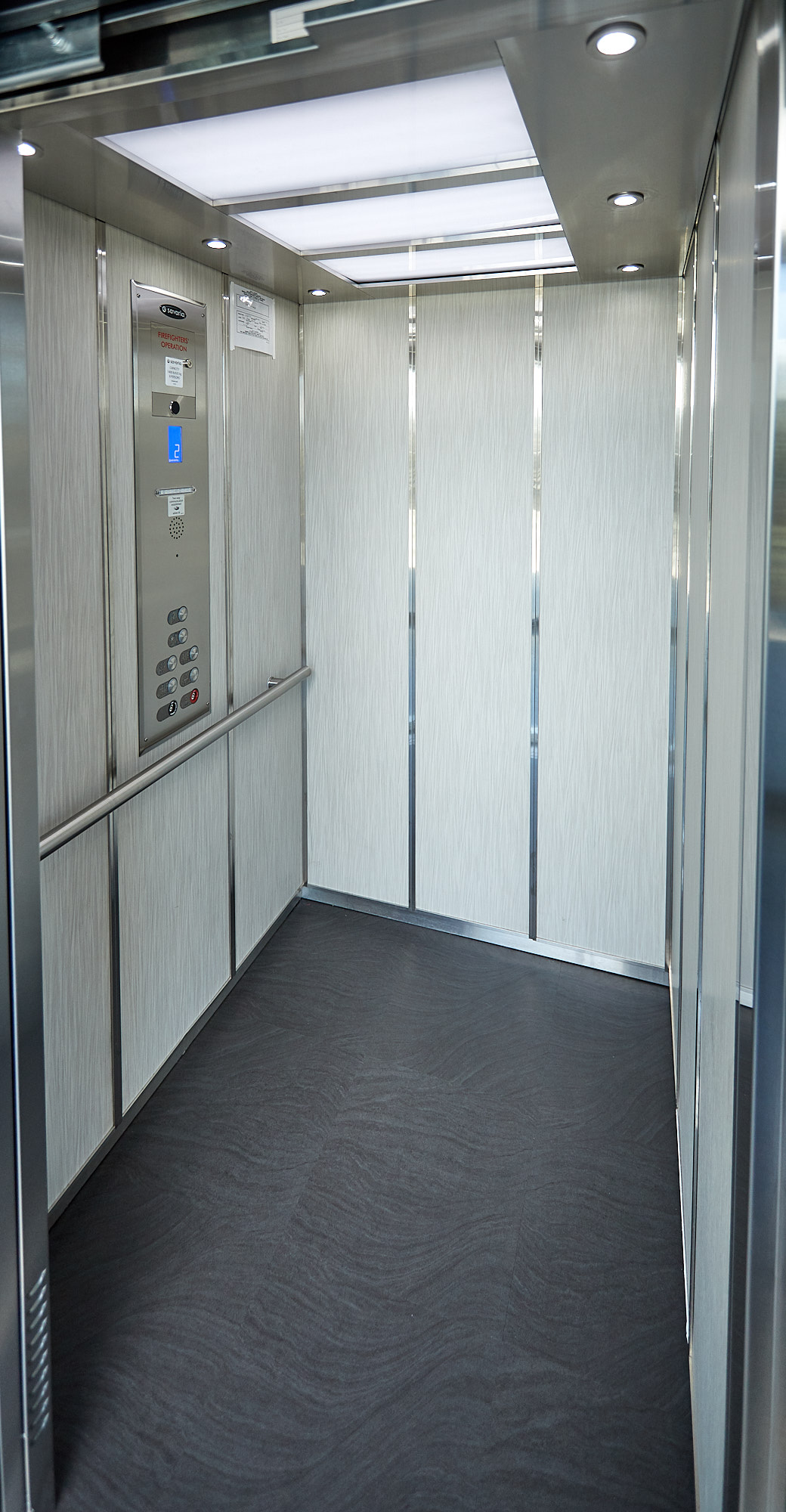

Vertical platform lift
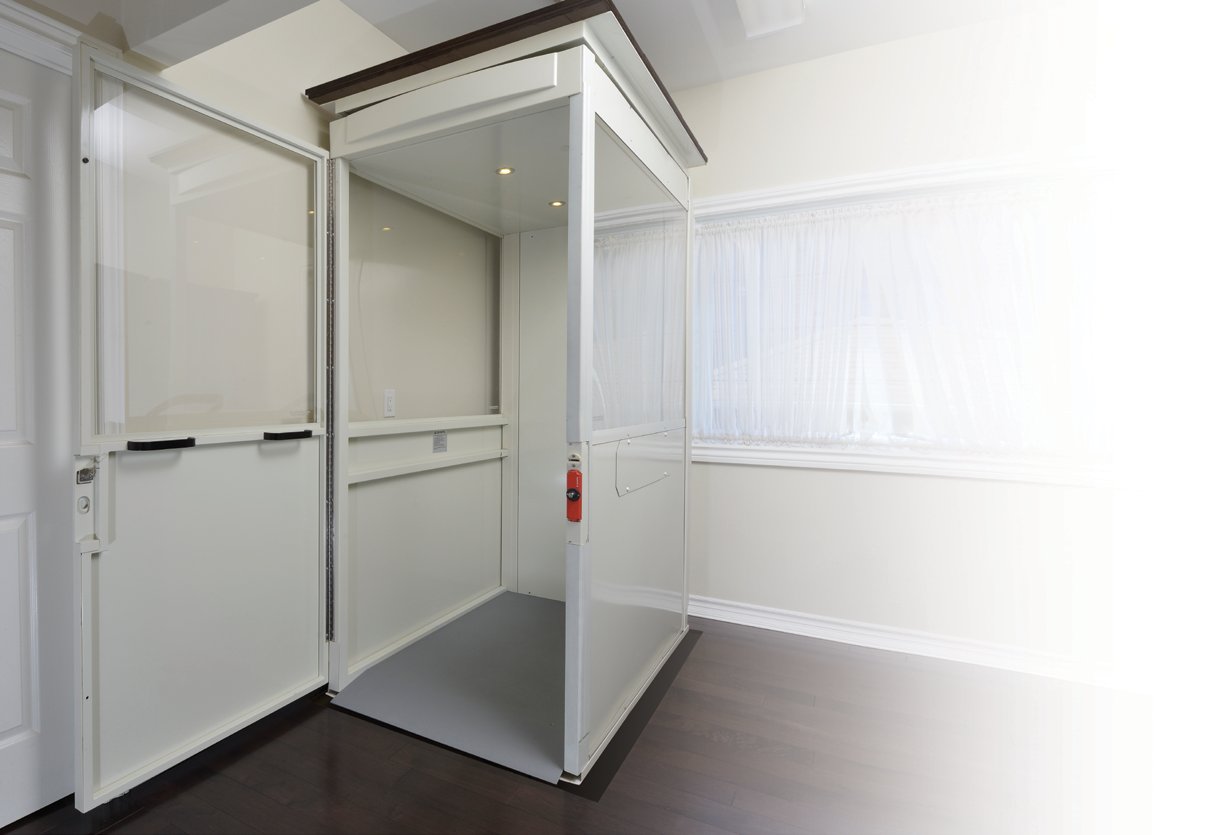
Savaria Telecab
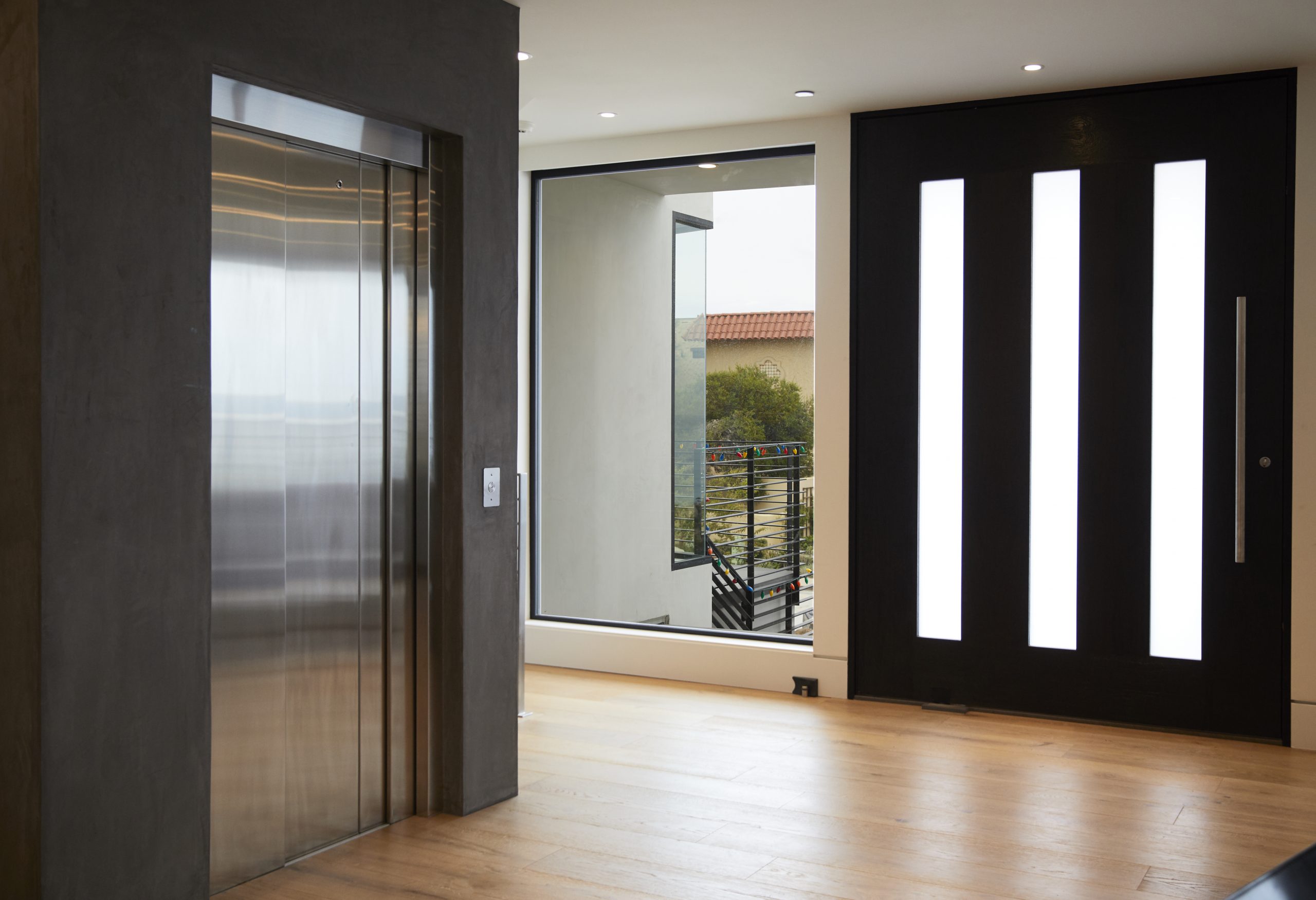
Wide stainless landing door
Fitting a chair, in three steps
The short answer
What we check
What to do next
Cab sizes for real models
Cab size is measured in inches, width by depth. Here is what manufacturers publish for the models we install. Always confirm on the spec sheet for your configuration.
- Savaria Eclipse: 36×48, 36×54, 36×60 or 40×54 inches, with custom sizes available. Capacity 950 or 1000 lb.
- Savaria Infinity and Infinity HD: the same cab sizes as the Eclipse, with the HD version at 1400 lb in a 48×60 cab.
- Savaria Zenith: 36×54, 36×60 or 40×54 inches, rated 1400 lb standard.
- Savaria Telecab 17: a two-stop through-floor lift, 845 lb, cab 30×46 inches with a 36×54 option.
- Stiltz Trio: a shaftless home lift that carries up to three people or a wheelchair with a ramp, according to Stiltz. The Duo is smaller, for two people.
A larger cab and a heavier rating give a power chair or a helper more room. The Infinity HD at 48×60 is the largest of these. If you need more than a cab can offer, we can talk about custom sizes.
Turning space matters more than the cab
A wheelchair user must be able to get in, turn if needed and get out. Some cabs have a door on the opposite side, called a through or thru cab, so the rider rolls in and rolls out without turning. Others have both doors on one side, which is fine for a rider who can back out. A power chair with a long wheelbase may need a deeper cab than a manual chair.
Outside the cab, check the space in front of the landing. You need room to line up with the door and a clear path beyond it. A hallway only a little wider than the chair can undo a good cab. We look at each landing, because the hallway decides more than the catalog does.
We do not give a single turning-space number, because chairs differ. Bring your chair to the visit or send us its model so we can measure.
Door widths and openings
The door is the narrowest part. Hoistway doors and cab gates have a clear opening smaller than the cab, so check the opening, not the cab width. The type of door matters, too. Swing doors need clear space to open, bifold doors fold out of the way, and automatic doors help a rider who cannot reach or push. Our bifold elevator doors page shows one of the options.
Automatic doors, a call station within reach, and a control panel at a good height all help a rider with limited reach or strength. Ask about them, and about where the buttons sit. A touchscreen is an option on several Savaria models.
If you only need to cover a short rise, such as a porch or a half-level, a platform lift may fit better than an elevator.
Walkers, scooters and a caregiver
A walker needs far less room than a chair, and a compact cab can do the job. A scooter is longer than most chairs and may need a through cab. If a caregiver rides along, add that person’s space and weight. A capacity rating of 950 lb or more helps with a helper and a heavier power chair.
Think too about the day when the chair changes. Someone who walks now may use a chair next year. If you are choosing a cab for the long run, size up. See aging in place for stages, and stairlift versus elevator if you are still deciding.
What a measure visit involves
We come to the house, measure your chair, test the doors and hallways, and show which models fit. Then we give you a written quote. The visit is free. We also coordinate the building permit with your city’s building department. Cal/OSHA does not inspect single-family home elevators, but your city’s building department still requires a permit and review for the structural and electrical work. Our space guide covers the footprint.
Ask about emergency features as well. Most modern units have battery lowering that brings the car to a landing and opens the door in a power outage, and an alarm or phone. We cover those in our power outage guide. For help with who pays, read paying for a home elevator.
Frequently Asked Questions
What size home elevator do I need for a wheelchair?
It depends on your chair. Cabs run from about 36×48 to 40×54 inches on the Eclipse, with larger sizes on other models. We measure your chair and the doors on a free visit and match a cab to them.
Can a home elevator carry a wheelchair?
Yes, many can. Savaria’s full-size cabs and the Stiltz Trio are built to carry a wheelchair. A compact lift may not, so confirm the cab and doors before you buy.
Will an elevator let my parent keep using a walker or wheelchair?
Yes, with the right cab. The rider rolls in, rides, and rolls out at the other floor without leaving the chair, which a stairlift cannot do. We check turning space on each landing.
Do I need a through cab with doors on opposite sides?
A through cab lets a wheelchair user roll in and out without turning, which helps in tight spaces. If a rider can back out, a single-side cab can work. We look at your layout and your chair.
Is a shaftless home elevator accessible for a wheelchair?
Some are. The Stiltz Trio is wheelchair-capable, according to Stiltz. Smaller shaftless units are not. Check the cab size, the door and the chair together before you decide.
What if I only need to get over a few steps?
A platform lift is made for short rises such as a porch or half-level, and carries a wheelchair. It costs far less than an elevator. We can quote one on a free visit.
Bring your chair measurements. We will bring the tape.
Free in-home measure and a written quote. Call (833) 865-7887.




