
Home Elevator Insurance and Liability: Who Is Responsible?
Liability, Records and Guests
Owning an elevator and sleeping well
The worry we hear from owners is this: “If someone is hurt in my elevator, who pays, and will my insurance even cover it?” It is a sensible question. Homeowners ask it when they buy a house with an elevator, when they install one, and when they start renting a home on a short-term platform. We are an elevator contractor, not an insurance agent, so we cannot tell you what your policy covers. We can tell you what insurers and claims adjusters tend to ask for, and how to put yourself in the best position.
The short version is to tell your insurer, confirm your coverage, and keep good maintenance records. Those three steps solve most of the worry. The rest of this guide explains why, in plain language.
Advantage Elevator is a licensed California elevator contractor (CSLB C-11 #1027832). We have served San Diego and Orange County homes for more than 20 years. Please read our guidance as information to bring to your insurance professional, not as legal or insurance advice.
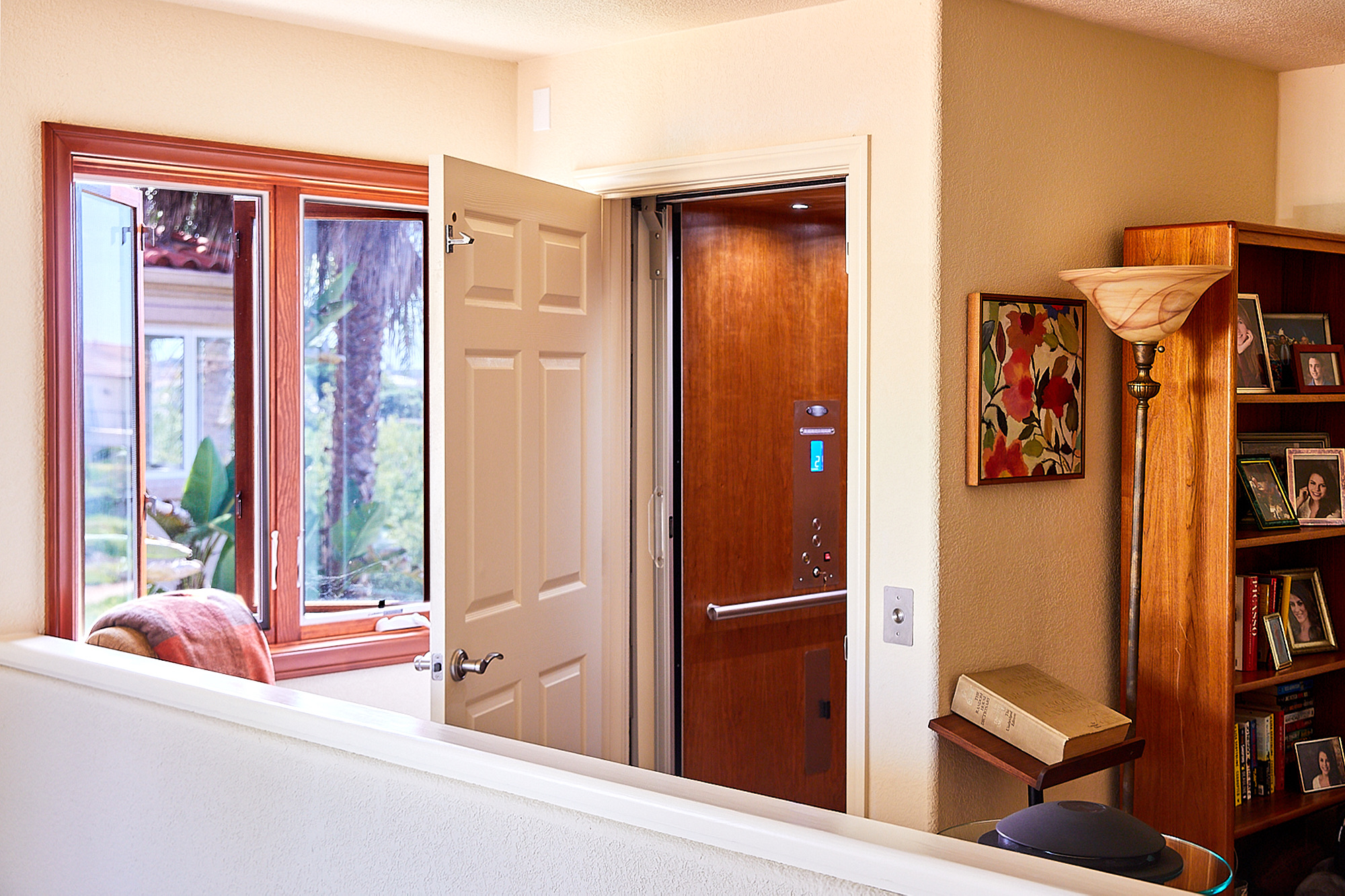

Controller access

The Advantage Elevator team
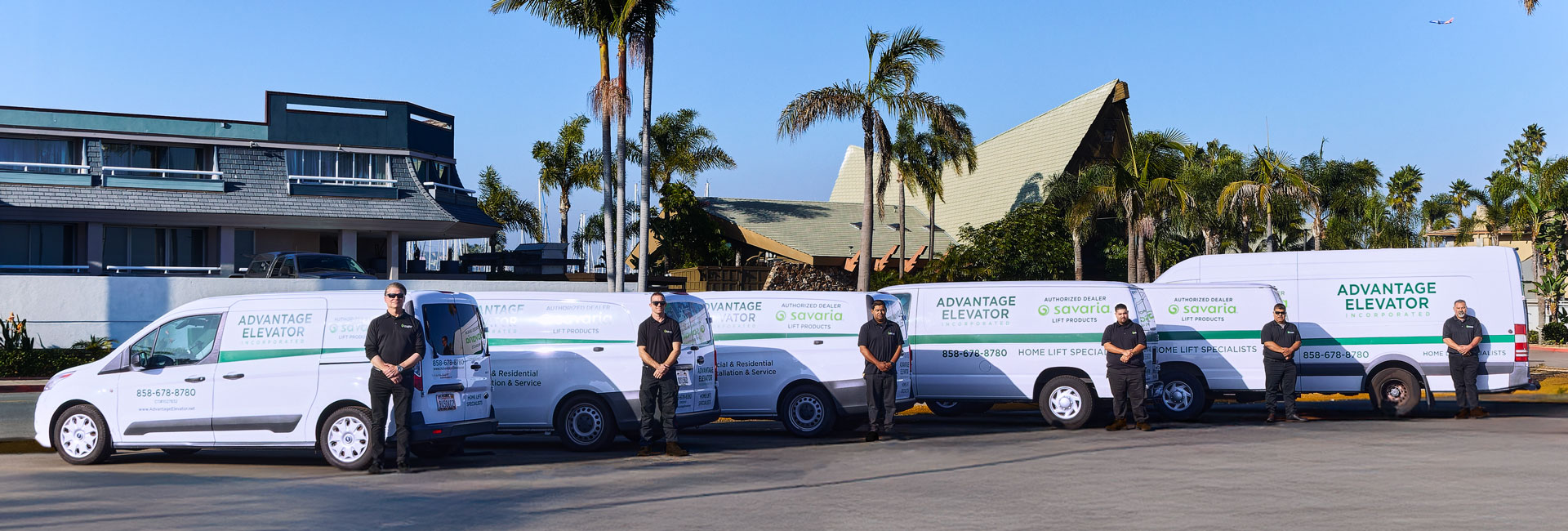
Advantage Elevator crew and service fleet
Insurance and liability at a glance
The short answer
What we provide
What to do next
Does homeowners insurance cover a home elevator?
Most homeowner policies treat a built-in elevator as part of the dwelling, the same way they treat a staircase or a furnace. That usually means the elevator is covered against the same kinds of loss as the rest of the house, such as fire. But policies differ, and details like liability for injuries, exclusions for mechanical breakdown and wear, and limits on the added value can differ too. Confirm your coverage with your agent. Do not assume.
When you add an elevator, the value of your home and the cost to rebuild it can both go up. That may change the dwelling coverage you need. Insurance companies also like to know about it up front. Telling your insurer is better than having them find out after a claim. It is a short phone call.
Ask your agent three questions: Is the elevator covered as part of the dwelling? Does the policy change because I have one? What does my liability coverage say if a guest is injured on the premises? We do not state premium amounts, because they vary by insurer and home.
Maintenance records are the owner’s protection
If something goes wrong, the question that matters is whether you kept the elevator in good condition. A folder of dated service reports answers that question. It shows regular inspections, safety-device tests, repairs made promptly and recall fixes completed. It also shows that you responded to problems when they appeared. In contrast, an elevator with no maintenance history is harder to defend and harder to insure.
Our annual and bi-annual maintenance plans include a full inspection and safety-device testing at each visit. Each visit produces a record. Many manufacturer warranties also require regular maintenance, so records can protect your warranty as well. Keep the records in one place, along with the installation permit, the manual and any recall paperwork. If you ever sell, they help your buyer, as we explain in buying a house with an elevator.
Known hazards and recalls: the duty to act
A known hazard changes the picture. The U.S. Consumer Product Safety Commission (CPSC) has publicly announced recalls and warnings about the gap between the landing door and the car door or gate on residential elevators, including units from Savaria, Inclinator, Bella and TK Access, and a separate warning on Waupaca. If your elevator is one of these and the fix was not done, you are an owner who knew, or should have known, about a risk. That is a bad position if a child is hurt. The fix is usually a free space guard from the manufacturer, or an electronic monitoring device. See our guide to child safety around home elevators, and let us measure your gap.
Guests, tenants and short-term rentals
An elevator in a rental or vacation home carries extra responsibility. Guests do not know your elevator. They may be children, older adults or visitors who have never used a home elevator. The CPSC has specifically urged people to check residential elevators at rental homes. If you rent out your house, even for a few weekends, take these steps.
- Complete any recall repair and keep proof of it
- Put clear instructions in the elevator and in the welcome binder: how to use it, what to do if it stops, and our emergency number
- Use keyed operation to lock out the elevator if you do not want young children to use it
- Keep maintenance current, with a record after each visit
- Tell your insurer and your rental platform’s insurance provider about the elevator, and ask whether your rental coverage includes it
Please ask your insurance professional how your policy treats rentals, because many homeowner policies treat short-term rentals differently.
Who is responsible when something fails?
We cannot give legal advice, but we can describe how responsibility usually works in practice. As the homeowner, you are responsible for keeping your property reasonably safe. A maintenance contractor is responsible for the work it performs. A manufacturer is responsible for defects in its products and for recall remedies. Responsibility in a real claim depends on facts, contracts and law, and an attorney or your insurer is the right person to ask. What helps in nearly every case is a clear paper trail and a safe, well-kept elevator. See also home elevators and earthquakes for quake planning, and what to do if you are stuck.
Frequently Asked Questions
Does homeowners insurance cover a home elevator or lift?
Most homeowner policies treat a built-in elevator as part of the dwelling, but coverage varies. Confirm your policy with your agent in writing.
How does a home elevator impact my insurance?
It can raise the value of the home and the cost to rebuild, which may change your dwelling coverage. Tell your insurer you have one and ask how it affects your policy.
How much is home elevator insurance?
There is usually no separate elevator premium. The cost depends on your insurer and policy, so ask your agent. We do not quote insurance amounts.
Who is liable if a guest is hurt in my home elevator?
Liability depends on the facts, your policy and the law, so ask your insurer or an attorney. Documented maintenance and completed recall fixes put you in a stronger position.
Do I need to tell my insurer about a home elevator?
Yes, it is a good idea. A short call before a claim avoids surprises, and it lets you confirm how the elevator is covered.
What should I do about my elevator if I rent my house short-term?
Complete any recall repair, post clear instructions and our emergency number, keep maintenance current, and ask your insurer whether your rental coverage includes the elevator.
Keep good records, sleep better.
Maintenance plans that leave a dated record every visit. Call (833) 865-7887.




