
Home Elevator Installation in San Diego, CA
Designed, Permitted and Installed Locally
San Diego home elevator installation by a Carlsbad company
Advantage Elevator is headquartered at 5857 Owens Avenue, Suite 300 in Carlsbad. Our installers live in San Diego County. When we pull into a driveway in La Jolla, Rancho Santa Fe or Poway, we are close to our own shop, our own parts and our own service trucks. That matters on installation day, and it matters for the next twenty years of keeping the elevator running.
We are a Savaria Elite dealer, and we also install Stiltz and Cambridge Elevating. A home elevator is not a catalog item. The right machine depends on your stairs, your framing, your lot and who will be riding it. We start with a free in-home visit, measure the space, and tell you which models fit and which do not.
- Pricing: quoted after a free in-home visit — see what a home elevator costs
- Licensed California elevator contractor, CSLB C-11 #1027832, more than 20 years in business
- 4.9 stars across 300+ Google reviews
- Free in-home estimate anywhere in San Diego County
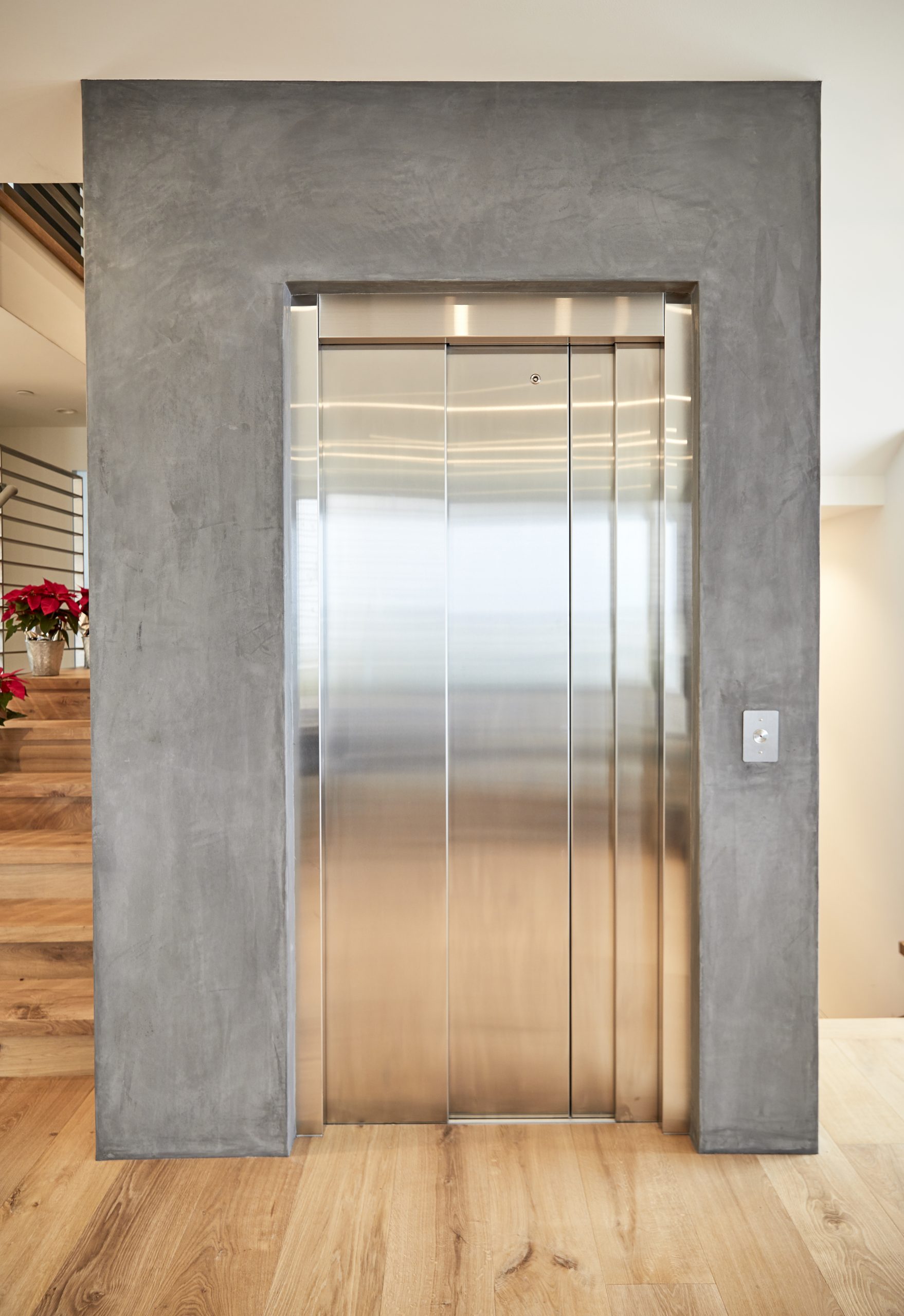

Hoistway framed for the elevator

Rails and car sling going in
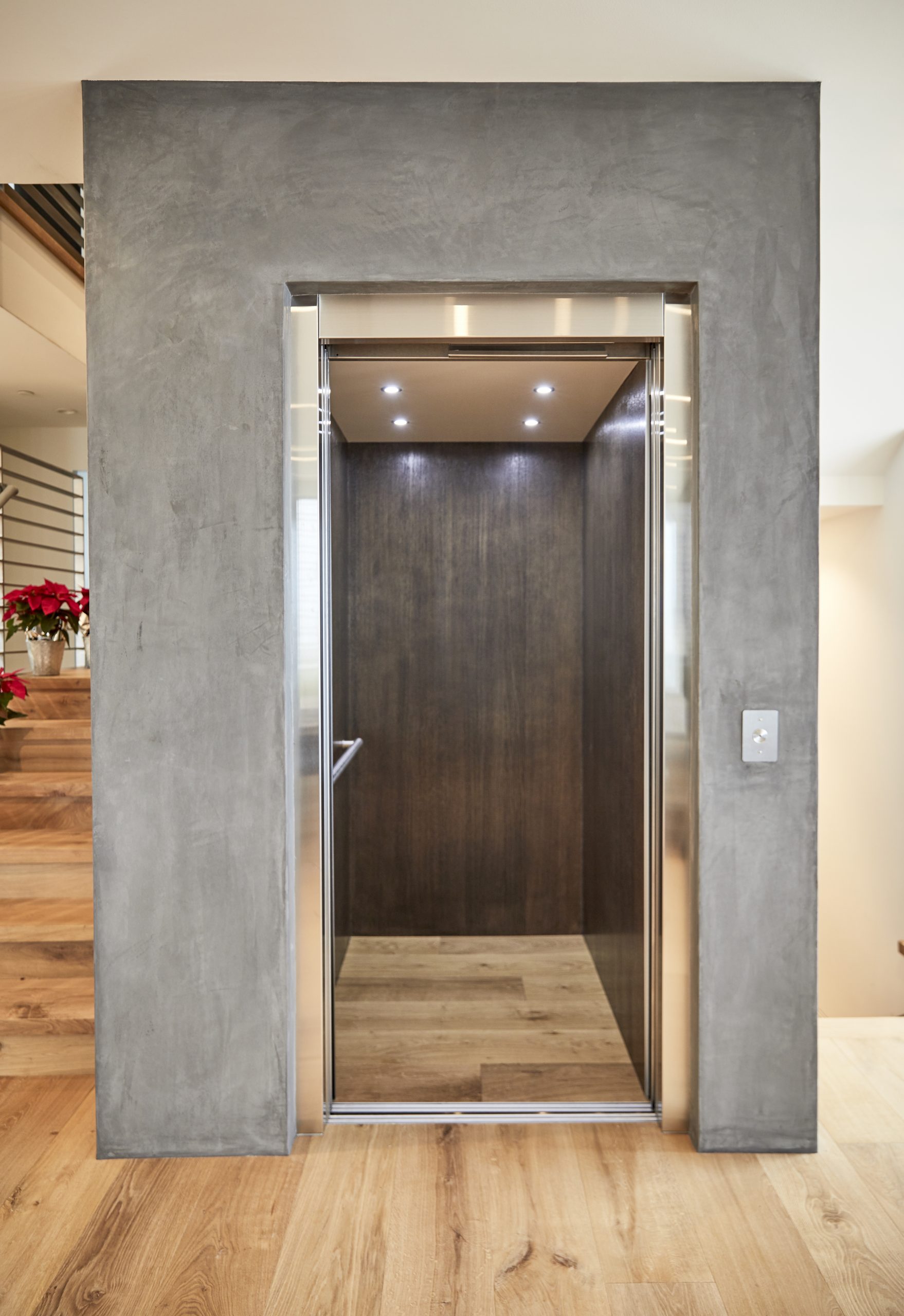
Finished installation
Three ways a home elevator goes into a San Diego house
Inside an existing closet stack
A shaftless glass or acrylic lift
A new shaft in a remodel or new build
How a home elevator installation works, start to finish
1. Free visit and measure. One of our team comes to the house, looks at the stairs, checks floor-to-floor height, finds where a shaft or closet stack could go, and asks who will use the elevator. Wheelchair and walker users need a larger cab than someone who just wants to stop carrying laundry.
2. Model and design. We show you the options that fit. Cab size, door style, wall finishes and fixtures are chosen here. See our custom finishes and the full home elevator lineup.
3. Drawings and permit. We prepare the drawings and handle building permit and inspection coordination with your city or the county. Cal/OSHA’s elevator program does not cover a single-family private home, but your city’s building department still reviews the shaft and electrical work. We do not promise a permit outcome, because that is the building department’s decision, but we know what each jurisdiction asks to see.
4. Construction. If your project needs framing, a pit, or electrical work, we coordinate it or work with your contractor. Then our crew sets the rails and machine, hangs the doors, wires the controller and installs the cab.
5. Testing and handover. We test every safety device, set the battery lowering system, and show you how to use the controls. Your inspection happens, and you get a warranty explanation and an offer of a maintenance plan. Savaria’s parts warranty runs 36 months through the dealer and requires regular maintenance.
Timelines you can plan around
Every home is different, so we give you a schedule in writing after the visit, not a guess over the phone. In general, the paperwork stage (drawings, permit, ordering the elevator) takes longer than the installation itself. Lead times from the factory vary by model. A shaftless lift in a home with no construction needed is the quickest path. A framed shaft with a pit, new electrical and finished drywall takes longer, and the elevator crew may only be on site for part of it.
The best way to shorten the schedule is to decide on the model early, tell us about any HOA review, and have your contractor ready. We tell you honestly which steps are on us and which are on the city.
Electrical and space: what your house needs
Most home elevators do not need much, but they do need the right things. The Savaria Eclipse, for example, runs on a dedicated 230-volt single-phase circuit plus a separate 120-volt lighting circuit. It needs about 8 inches of pit and 96 inches of overhead clearance above the top landing. The Infinity is hydraulic and wants a small machine space for the tank and controller. Through-floor lifts such as the Telecab run on a dedicated 110-volt, 20-amp circuit and need no hoistway at all.
These are the numbers we check on the measure visit. If your panel needs an upgrade or your ceiling is too low for one model, we move to a model that fits instead of forcing it. Read more on the Infinity, Eclipse and Telecab pages.
Which elevator fits which San Diego home
La Jolla and Point Loma hillsides. Homes on Mount Soledad, in the Muirlands and above Sunset Cliffs often step down a slope across three or four levels. A multi-stop elevator turns a long run of stairs into a one-button ride. Hillside lots also mean tight access, so we plan the delivery of the cab and rails before installation day. See La Jolla and Point Loma.
Rancho Santa Fe and Fairbanks Ranch. Large estates are usually two stories with a grand staircase, and sometimes a guest house or pool house as well. Clients here often want a custom cab that matches the interior. Neighborhood design review can apply, so we get the drawings in early. See Rancho Santa Fe.
Coronado. The island is almost at sea level and built partly on dredged fill, so the water table is high. A deep pit can become an engineering problem. A shaftless lift with an access ramp, or a model with a shallow pit, avoids digging down. We bring that up on the first visit. See Coronado.
Carlsbad and Encinitas beach rebuilds. Small coastal lots are being rebuilt as two- and three-story homes. A rebuild is the easiest time to add a shaft, because the walls are open. See Carlsbad and Encinitas.
Inland Poway, Escondido and Rancho Bernardo. Two-story tract homes from the 1970s through the 1990s, often with the owners who bought them new. Stacked closets are common, and an elevator frequently goes in without major structural work. See Poway and Escondido.
What a home elevator costs in San Diego
A fully installed home elevator in Southern California typically runs Pricing depends on the model, number of stops and construction — see what a home elevator costs. Where you land in that range depends on the model, how many floors it serves, the cab finishes and how much construction your house needs around it. A two-stop elevator in a closet stack with standard finishes sits toward the lower end. Three or four stops, a hardwood cab and a new shaft with a pit sit toward the upper end.
We give you a written quote after the measure visit, with the elevator, installation, electrical and any construction items listed separately, so you can see what you are paying for. Our home elevator cost page explains each line in more detail.
Frequently Asked Questions
How long does it take to install a home elevator in San Diego?
It depends on the model and your home. Paperwork and factory lead time usually take longer than the installation itself. After the free visit we give you a written schedule that separates our steps from the building department’s.
Do I need a permit for a home elevator in San Diego County?
Yes, a building permit from your city or the county is normally required for the shaft and electrical work. We prepare the drawings and handle the permit and inspection coordination. The outcome is the building department’s decision.
Can an elevator be added to an existing house without major remodeling?
Often, yes. Stacked closets, a corner of a room or a space beside the stairs can hold a machine-room-less elevator. Shaftless lifts and through-floor lifts need even less. We tell you what is realistic at the free visit.
What does a home elevator cost installed?
Pricing depends on the model, number of stops and construction — see what a home elevator costs. Model, number of stops, cab finishes and the construction required drive the price. You get an itemized written quote after the free in-home estimate.
Who services the elevator after it is installed?
We do, from the same Carlsbad office. Our annual and bi-annual maintenance plans include full inspections and priority scheduling, and they satisfy the maintenance requirement in the manufacturer warranty. We also service elevators installed by other companies.
Ready to see what fits your home?
Free in-home estimate anywhere in San Diego County. Call (833) 865-7887.




