
Residential Elevator Inspection and Safety Check in California
Safety Check by a Licensed Contractor
Who inspects a home elevator in California, and why you should still have it checked
If you own a home elevator in California, no state inspector is coming to check it. California’s Elevator Safety Orders, in Cal/OSHA Title 8, section 3000(a), exempt an elevator in a single-unit private home that is not open to the public from the state’s permit and inspection program. That is a statement about who the state inspects. It is not a statement about whether your elevator needs attention. A home elevator carries your family, your parents or your guests up and down a shaft every day, and its safety devices only protect you if somebody tests them.
Advantage Elevator performs residential elevator inspections and safety checks across San Diego and Orange County. We are a licensed California elevator contractor (CSLB C-11 #1027832) and a Savaria Elite dealer, with more than 20 years in business and a 4.9-star rating across more than 300 Google reviews. We inspect every major brand, not just the ones we sell.
- Full safety-device testing with a written report of what we found
- All major brands, including older units whose installers have closed
- Pre-sale and pre-purchase checks for homes with an elevator
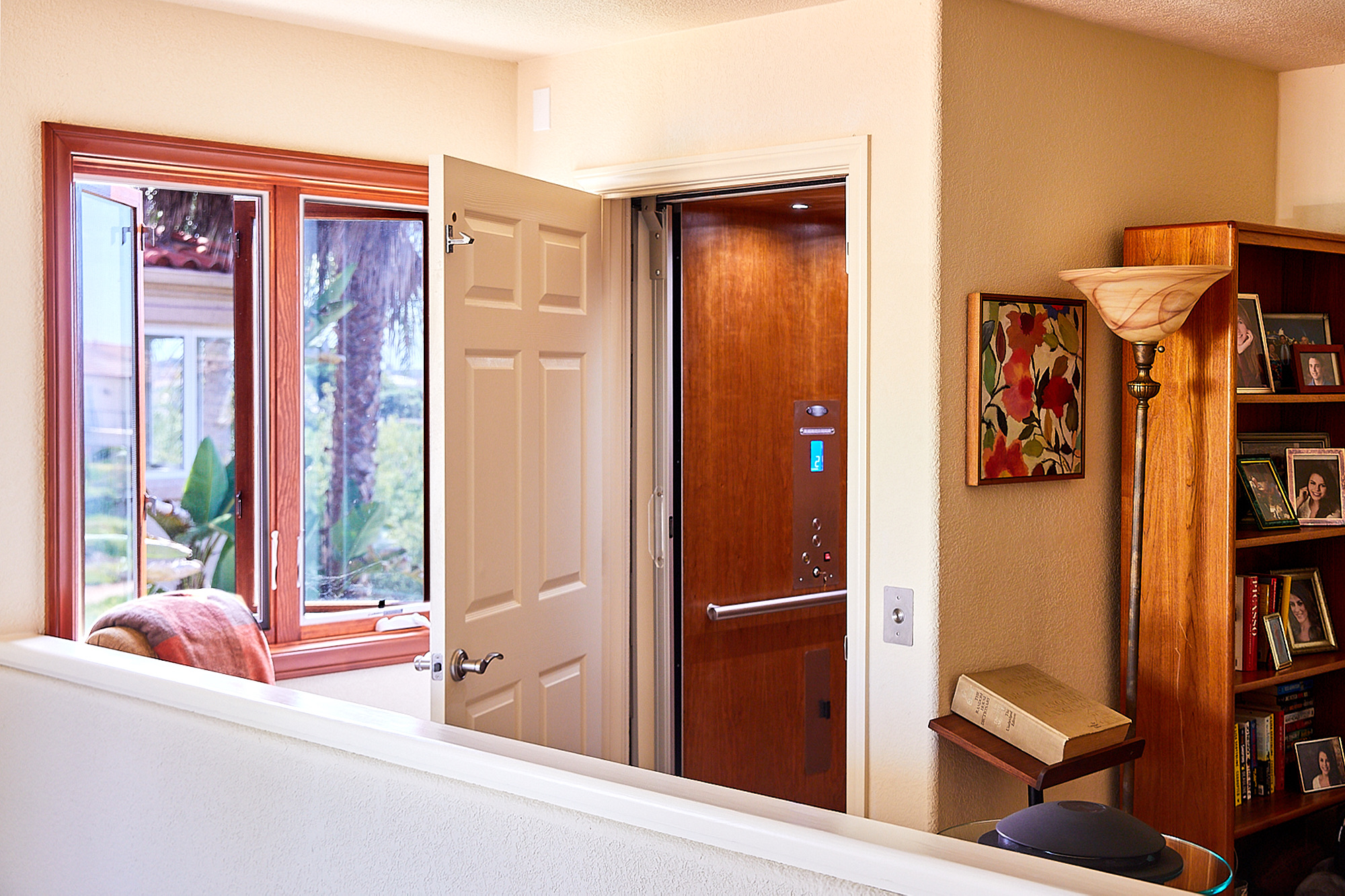

Controller access panel

Hoistway and guide rails
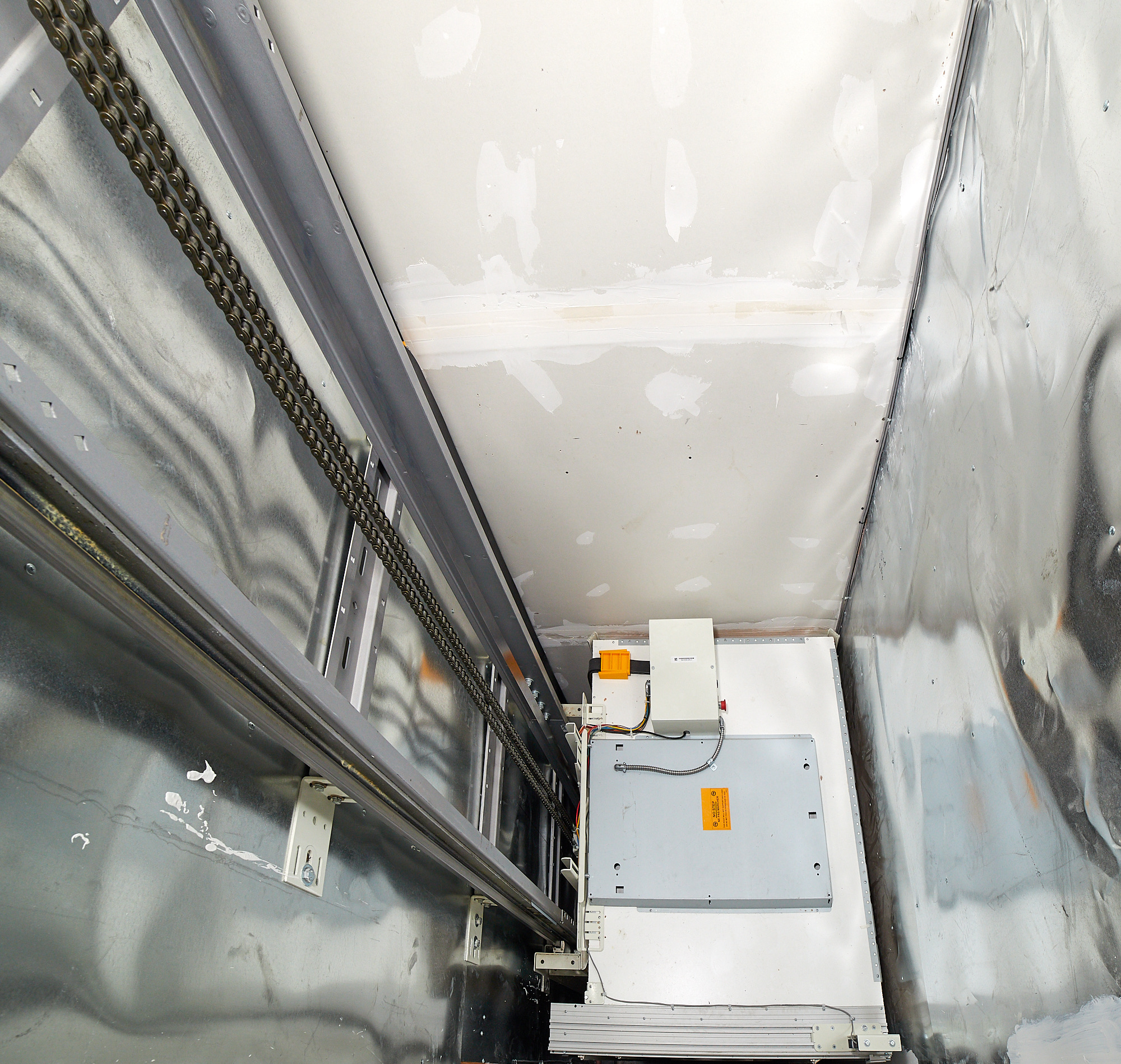
Drive unit inspection
Why a home elevator still needs an inspection
No state inspection program
Manufacturers expect maintenance
Wear you cannot see
What the exemption means, and what it does not
The state exemption covers the Elevator Safety Orders, the program that issues operating permits and sends inspectors to elevators in commercial and multi-family buildings. Under section 3000(a), an elevator located in a single-unit private home and not accessible to the public falls outside that program.
It does not mean the work is unregulated. Installing a home elevator still requires a building permit from your city’s building department, and the installer must be a licensed California contractor. We handle the permit and inspection coordination with your city when we install. If your home has a unit that was installed without a permit, or that nobody can find paperwork for, tell us. A safety check is a sensible first step, and we can explain what we see.
If your elevator serves anyone other than your household, such as a business, a rental or a care facility, different rules may apply. Ask us and your city.
What our safety check covers
A technician spends time on your elevator and works through the same list on every visit. We test each item, not just look at it.
- Safety circuit. The chain of switches that must all be closed before the car will move. We confirm each device does its job.
- Door interlocks and car gate switch. These keep the car from moving with a door open and the doors from opening when the car is not there. They are the most common cause of service calls, and the most important to keep working.
- Leveling. We check that the car stops flush with each floor, so no one trips on entering or leaving.
- Brake and drive. We test that the car holds and stops as designed, and we look at the motor, the pump or the gearbox depending on your type.
- Battery lowering. This is the feature that brings the car to a floor during a power outage. We test the batteries and run the system, because outages and wildfire-season power shutoffs are part of life in San Diego and Orange County.
- Pit and overhead. We inspect the pit for water, debris and corrosion, and the top of the hoistway for clearances and equipment.
- Ropes, chains or hydraulics. Depending on your elevator, we examine cables, chains, sheaves and the hydraulic fluid, hoses and cylinder for wear and leaks.
- Cab and controls. Alarm, emergency stop, lighting, call buttons and fixtures.
You receive a plain-language report. If something needs repair, we explain it, quote it in writing and do not start work until you say yes. Items that need attention but are not urgent are labeled that way.
When to schedule one
Most owners benefit from a check at least once a year, and twice a year makes sense for heavy use or for homes near the coast, where salt air attacks door contacts and relays. Our maintenance plans include a full inspection and safety-device testing, with priority scheduling and a reduced service rate, and they satisfy the maintenance requirement in most manufacturer warranties.
Other moments that call for a one-time inspection:
- Buying or selling a home with an elevator. A buyer wants to know the condition, and a seller can show a clean report. A general home inspector is not usually trained to test elevator safety devices.
- An older unit. If your elevator is more than about fifteen to twenty years old, or its original installer is gone, a check tells you what is worn and what is next.
- A new noise, a bump or a hesitation. These are early signs. Call us before they become a stalled car.
- After a power outage, a flood or an earthquake. Water in the pit or shifted equipment can affect safety devices.
- Before you hand the home to a renter, a caregiver or a grandchild who is not used to the elevator.
The newer standard on the hoistway door and car gate gap
One safety topic comes up often on inspections of older homes. Newer elevator standards pay close attention to the open space between the hoistway door and the car gate, because a small child or a pet could be caught in that gap. Many older residential elevators were built before this was addressed. Older units can be retrofitted with a space guard, a barrier that closes the gap. We measure the opening on your elevator, tell you whether a space guard makes sense, and quote the work.
If you have small children or grandchildren in the house, ask for this check in particular.
Questions about codes you may have read online
You may have seen a “3/4 rule” mentioned in discussions of residential elevators. It refers to a door-clearance safety standard for residential elevators. We would rather you get the right answer for your unit than an internet number, so our technician measures your elevator and explains which requirement applies to it and whether your elevator meets it. Standards also differ between older and newer installations.
The same goes for any other code question. We read the actual standard, look at your actual equipment and tell you what we find. To book a safety check, schedule service online or call (833) 865-7887.
Frequently Asked Questions
Does California require a home elevator inspection?
California’s Elevator Safety Orders exempt elevators in a single-unit private home that is not open to the public from the state’s permit and inspection program (Cal/OSHA Title 8, section 3000(a)). Your city still requires a building permit when the elevator is installed. Manufacturers require regular maintenance for warranty coverage, and Savaria recommends dealer inspection.
Who can inspect my home elevator?
A licensed California elevator contractor with trained technicians can test the safety devices and report on the condition. We do that for every major brand. A general home inspector can note that an elevator exists, but is not usually equipped to test its safety circuit.
What is the 3/4 rule for elevators?
It is a term people use for a door-clearance safety standard on residential elevators. We do not want to hand you a number that may not apply to your unit. Our technician measures your elevator, explains the requirement that applies and tells you where it stands.
Should I get my elevator inspected before selling my house?
Yes, it helps. A written report gives buyers confidence and gives you time to fix small problems on your schedule. Buyers who inspect on their own often find the same issues and use them in negotiation.
Can an older elevator be made safer without replacing it?
Often, yes. Common upgrades include a space guard for the gap between the hoistway door and car gate, new door interlocks, fresh batteries for the lowering system and a modern controller. We tell you what makes sense for your unit before you spend money.
Schedule a home elevator safety check.
Licensed C-11 contractor serving San Diego and Orange County. Call (833) 865-7887.




