
Home Elevator Cost in San Diego and Orange County, CA
What Moves the Price, Plainly Explained
How much does a home elevator cost in Southern California?
A fully installed home elevator in Southern California typically runs $40,000–$80,000 depending on model, number of stops, cab finishes and construction. The two things that move your price most are how much building work your house needs around the elevator, and how many floors it serves.
The rest of this page shows you what sits behind that range: the cost factors one by one, what an installed price includes, how a shaftless elevator compares with a traditional one, and how to get a firm number for your own house. If you are searching for residential elevator cost or home elevator pricing, this is the whole picture in one place.
Advantage Elevator is a Savaria Elite dealer and a licensed California elevator contractor (CSLB C-11 #1027832) with more than 20 years in business. We also install Stiltz and Cambridge Elevating, so we price different types side by side instead of steering you to the one product we happen to sell. Estimates are free, done in your home and put in writing.
- Free in-home estimate from our Carlsbad office, serving San Diego and Orange County
- Several types quoted side by side, so you see the real trade-offs
- 4.9-star rating across more than 300 Google reviews
Not sure an elevator will fit your house at all? Try the home elevator size checker first. It sorts every model by what fits the space you measure.
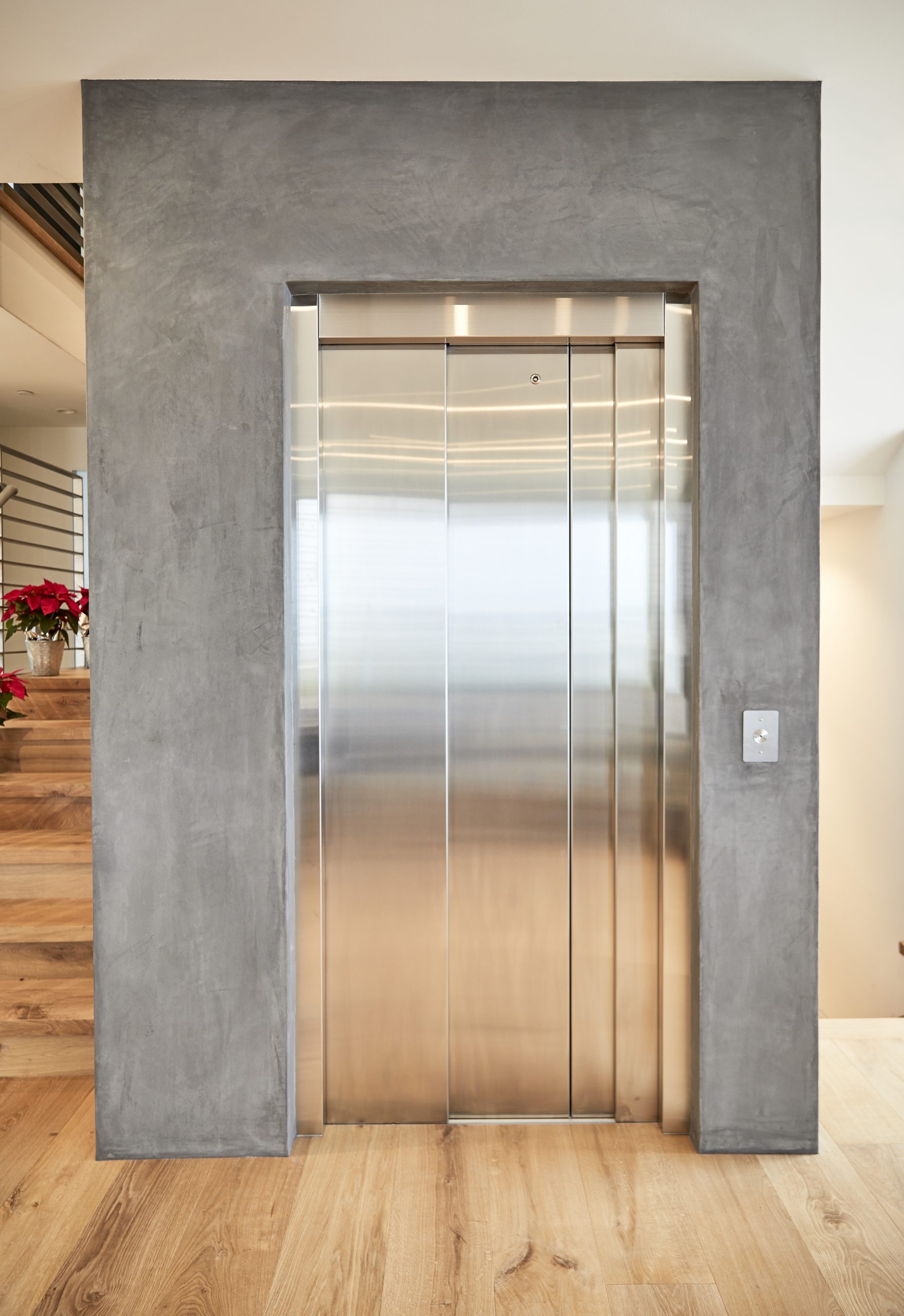
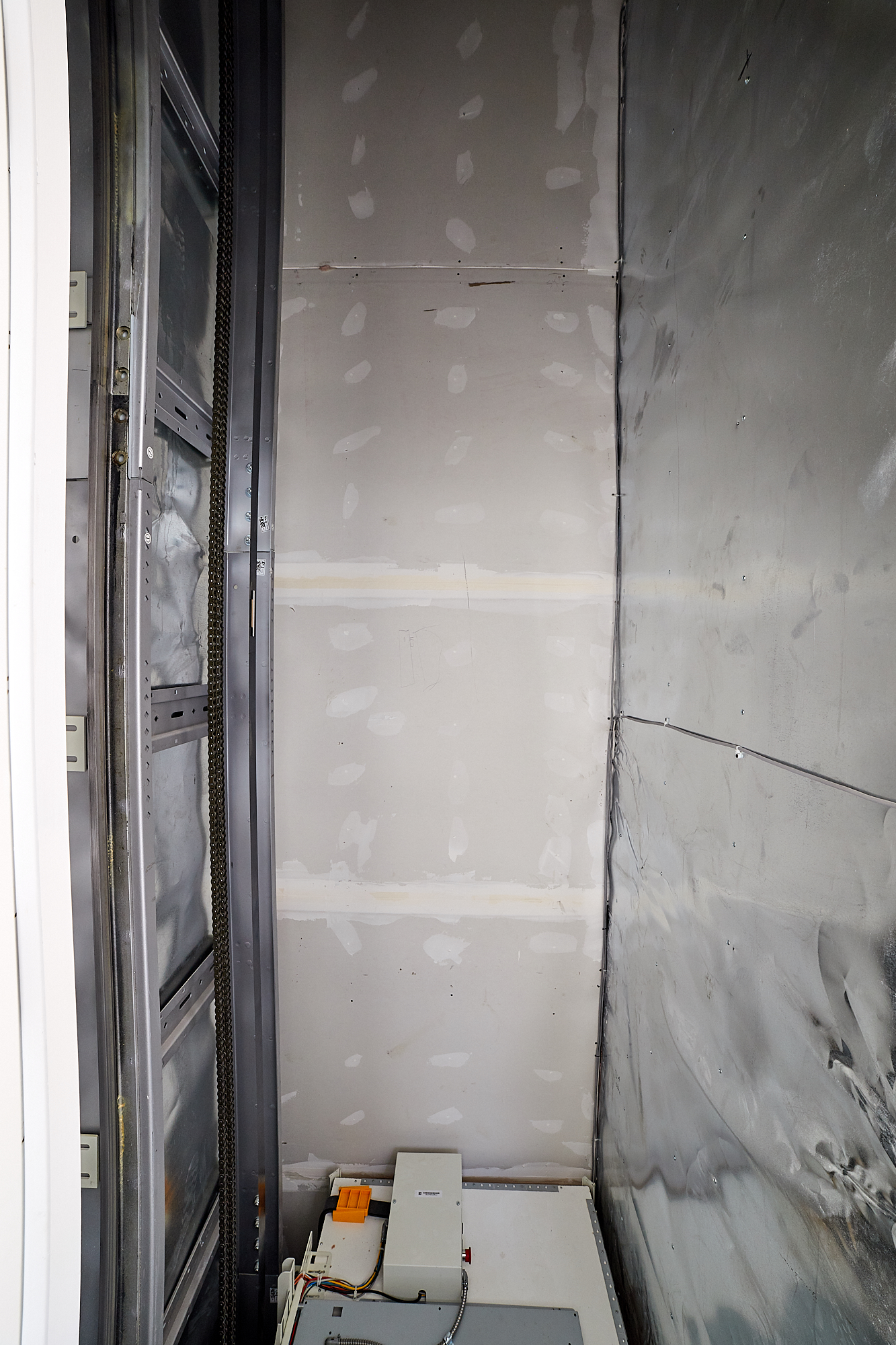
Hoistway framed and ready for the elevator
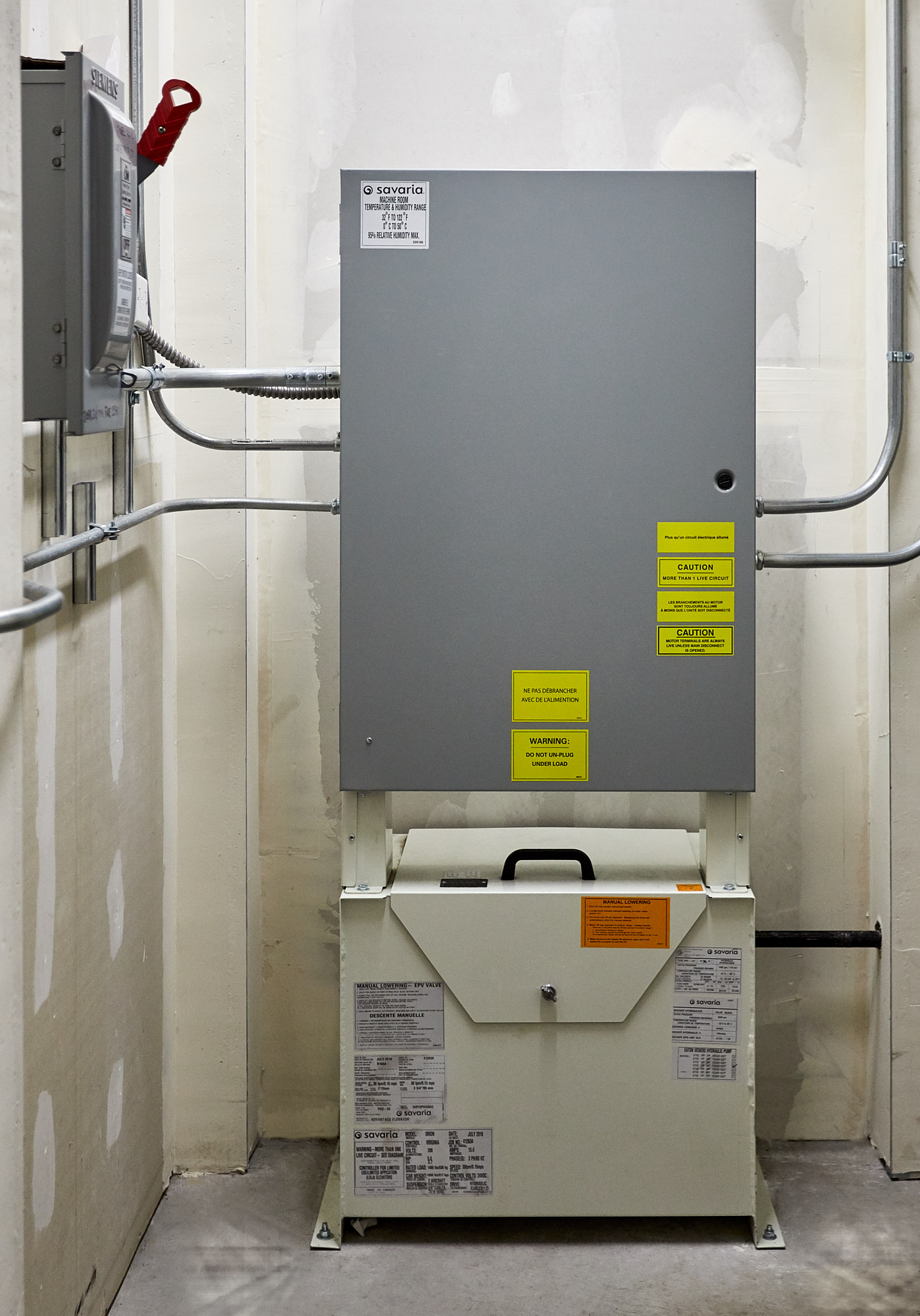
Hydraulic machine unit
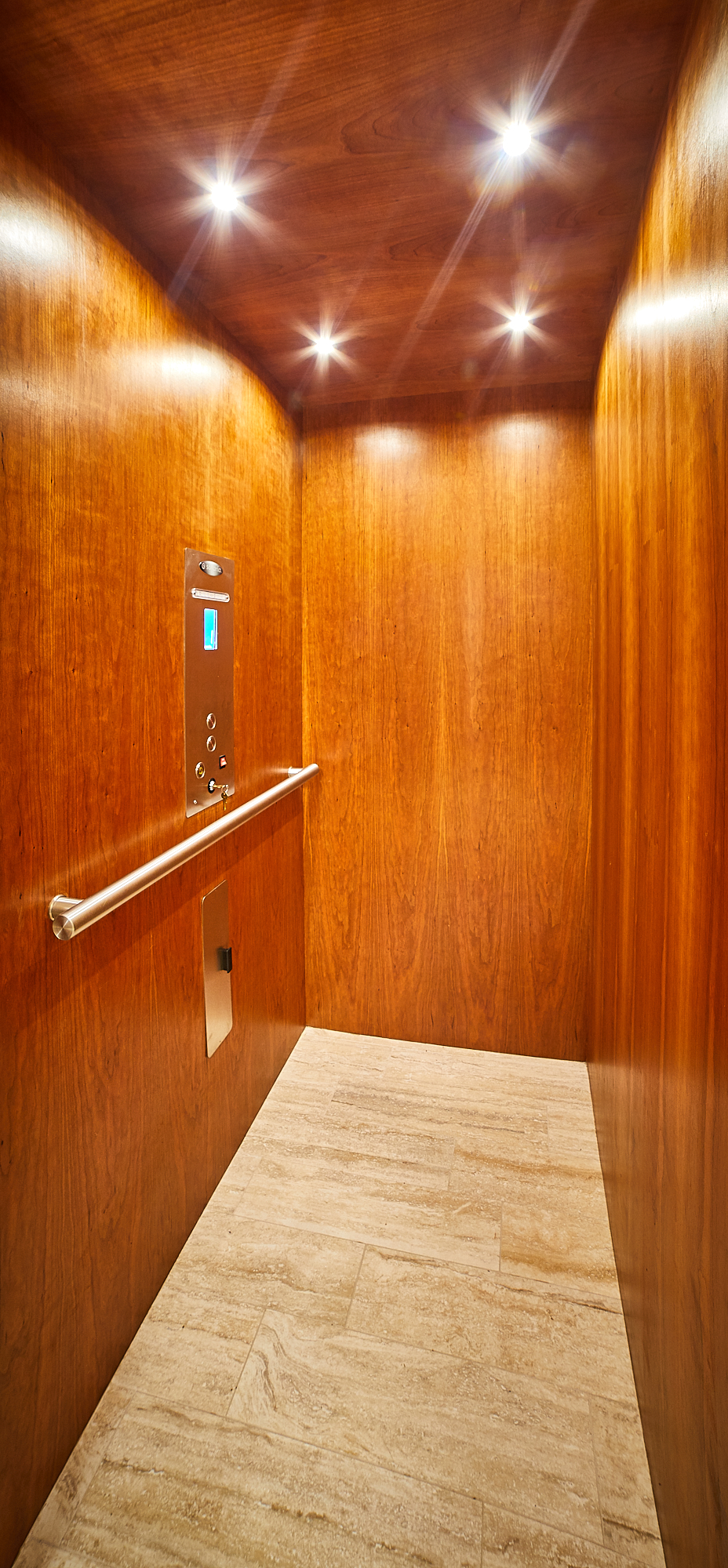
Finished wood cab
What moves a quote up or down
Toward the lower end
Toward the upper end
Cheaper than an elevator
What factors set the price of a home elevator?
Every residential elevator quote we write comes down to the same list. Knowing the list lets you decide where to spend and where to save.
- Number of stops and travel. Each landing adds a door, an interlock and a call station, and the car has to travel farther. A two-stop elevator between a garage level and the main floor is the simplest job we do. A hillside home with three or four levels is a bigger one.
- Type and drive. Hydraulic, traction, winding-drum and shaftless elevators are built differently and priced differently. Some need a machine room or a pit. Some do not. Our types of home elevators page explains each.
- Cab size and finishes. A standard cab is a good elevator. Hardwood veneer, solid wood, glass walls and custom fixtures move the price up. See custom elevator finishes.
- Doors and gates. Standard swing doors cost less than bifold or automatic doors. Automatic doors are a real comfort for wheelchair and walker users, and they add cost. Our bifold elevator doors page shows the option.
- Construction. The shaft, the pit, the framing and the structural work around them. In a new build the shaft is framed with the house. In an existing home we open ceilings and floors, reframe, and often move wiring, ducting or plumbing. This is usually the biggest swing between two similar elevators.
- Electrical. The elevator needs its own circuit and a lighting circuit. If your panel is full or far from the elevator, that work grows.
- Permits. Your city’s building department requires a permit and inspection. We handle the permit and inspection coordination with your city. Fees and requirements vary by city.
- Site access. Narrow hillside streets, bluff-top lots, stairs-only entries and tight side yards slow delivery and installation.
What does it cost to install a residential elevator, beyond the elevator itself?
People searching for the cost to install a residential elevator are usually asking about this part. The equipment is one piece. The installation work around it is the other, and it varies more from house to house than the equipment does.
Think of it in three layers. First, the elevator and its delivery. Second, our installation: setting the rails, car, doors and controls, then startup and testing. Third, the building work that makes room for it, meaning the shaft or opening, the pit where one is needed, framing, structural support, electrical and finish work around the doors.
On a new build, the third layer is planned with the house and is far smaller. On an existing home it can be the largest layer. That is why a ground-up plan and a remodel can land at opposite ends of the $40,000–$80,000 range even with the same elevator. For a longer list of the items people forget, read our hidden costs of a home elevator guide.
What is included in an installed home elevator price?
A written Advantage quote covers these items. Anything outside our scope is marked in the quote so nothing surprises you later.
- The elevator equipment, built for your model, cab size and finish
- Delivery to your site
- Installation by our own technicians
- The electrical connection to the elevator itself
- Permit and inspection coordination with your city
- Startup, testing and a walk-through where we teach your family how everything works, including the battery lowering feature that brings the car down in a power outage
Some work usually belongs to your general contractor or other trades because it is building work, not elevator work. That typically includes framing the shaft in an existing home, structural engineering, drywall and paint around the openings, running the main electrical feed from your panel to a point near the elevator, and flooring at the landings. On a remodel we work with your builder and architect from the start and mark exactly where the line sits in the written scope.
If you do not have a general contractor, tell us. We can describe the work in plain terms and suggest the trades you will need.
Is a shaftless home elevator cheaper than a traditional one?
Often, yes, mainly because the building work is smaller. A shaftless home elevator carries its own drive and guides, so nobody frames a hoistway, digs a pit or builds a machine room. You cut an opening in the upper floor and run a power circuit. In a finished house that can remove the single biggest construction cost.
The trade-off is what you give up. Shaftless lifts are mostly two-stop, with a smaller cab and a lower capacity. A traditional hoistway elevator serves more floors, can carry a bigger cab, and gives more choice in finishes. Which one is cheaper for you depends on your house, so we price both when both could work.
What are you comparing? Our stairlift vs home elevator guide covers the next step down in cost and what you give up with it.
How much does a small home elevator cost?
A small home elevator costs less than a large one, but the saving is smaller than most people expect. A compact cab trims equipment cost and the size of the opening you need. The stops, the construction and the electrical stay the same.
Small elevators also fit where big ones cannot, which sometimes matters more than price. A stacked closet, a corner of a living room or the space beside a staircase can be enough. Measure the space and run it through the size checker. It shows which models fit and what each one needs. We confirm every dimension on site before we quote.
What ongoing costs come after installation?
An elevator is a machine with moving parts, so plan for yearly service. Our maintenance plan includes a full inspection, safety-device testing and priority scheduling. Plan members pay $550 per visit instead of the standard $600, and the plan satisfies the maintenance requirement that comes with the manufacturer warranty.
Over the years, wearing parts get replaced as well. Tell your homeowner’s insurer when you install one. Our maintenance guide explains what each visit covers.
How do you get an accurate home elevator price for your house?
The fastest route to a real number is a visit. Request a free in-home estimate or call (833) 865-7887. One of our team looks at where the elevator could go, measures the floors, checks the electrical, asks how your family will use it and talks through two or three options. You leave with a written quote.
To make the visit count, bring these:
- The floors you want to connect, and whether a third or fourth stop might be needed later
- Who will ride: one person, a couple, a wheelchair or walker user
- Your plans, if you are remodeling or building
- Your timeline. Our installation timeline guide shows how long each phase takes
If you are still in the design phase, send us the plans. We will tell you what to frame and how large to make the shaft before the walls go up. That conversation saves homeowners more money than any discount.
Are there ways to pay for a home elevator?
Yes, and the options depend on your situation. Our guide to paying for a home elevator walks through the common routes. We do not promise any coverage or tax result, because each depends on your plan, your program and your tax situation. Ask your own advisor, and tell us what you are looking at so we can supply the paperwork you need.
Frequently Asked Questions
How much does a home elevator cost?
A fully installed home elevator in Southern California typically runs $40,000–$80,000 depending on model, number of stops, cab finishes and construction. The building work around the elevator is the biggest variable. We give a written quote after a free in-home visit.
Is a shaftless home elevator cheaper?
Often, because there is no framed shaft, pit or machine room to build. Shaftless lifts are mostly two-stop with a smaller cab, so the right choice depends on your house and how you will use it. We price both types when both could work.
What adds the most cost to a home elevator?
Construction. Cutting a shaft into a finished home, moving wiring or plumbing, and structural work add more than any single equipment choice. After that, extra stops, a larger cab, custom finishes and special doors push the price up.
Does insurance or Medicare pay for a home elevator?
Medicare generally does not cover home elevators. Other programs and tax treatment may apply in some cases, and they change, so confirm with the program or your tax professional. Our guide to paying for a home elevator lists the routes to ask about. We cannot promise any coverage.
What does home elevator maintenance cost?
Plan on a yearly service visit. Members of our maintenance plan pay $550 per visit instead of the standard $600, and the plan includes a full inspection, safety-device testing and priority scheduling. See the maintenance plan page for what each visit covers.
Get a real price for your home.
Free in-home estimates in San Diego and Orange County. Call (833) 865-7887.


