
Home Elevator for Aging Parents: When to Install, How to Decide, How to Start the Talk
When to Act and How to Decide
The stairs are getting harder. What now?
Most of our calls about aging parents begin the same way. An adult daughter or son says Mom or Dad is in their eighties, the bedrooms are upstairs, and every trip up the stairs makes the family hold its breath. Some have already had a scare. A few are asking before anything has happened, which is the better time to ask.
The worry behind the question is rarely about the machine. It is about timing, about a parent who does not want to be told what to do, and about fear of a fall. People on public forums ask the same things: is it worth spending the money on a lift for parents, or is it better to move them somewhere with no stairs, and how do you get an aging parent to agree to changes at all? One family described attending a demonstration and being surprised that the work was reasonable and the construction was modest. That matches what we see.
This guide gives you a way to decide. We cover when to act, how to start the conversation, how an elevator compares with a stairlift or a move, and what happens on a visit from us. We are a licensed California elevator contractor (CSLB C-11 #1027832) with more than 20 years in the business. We will tell you if a simpler answer fits.


Stairlift on a carpeted stair
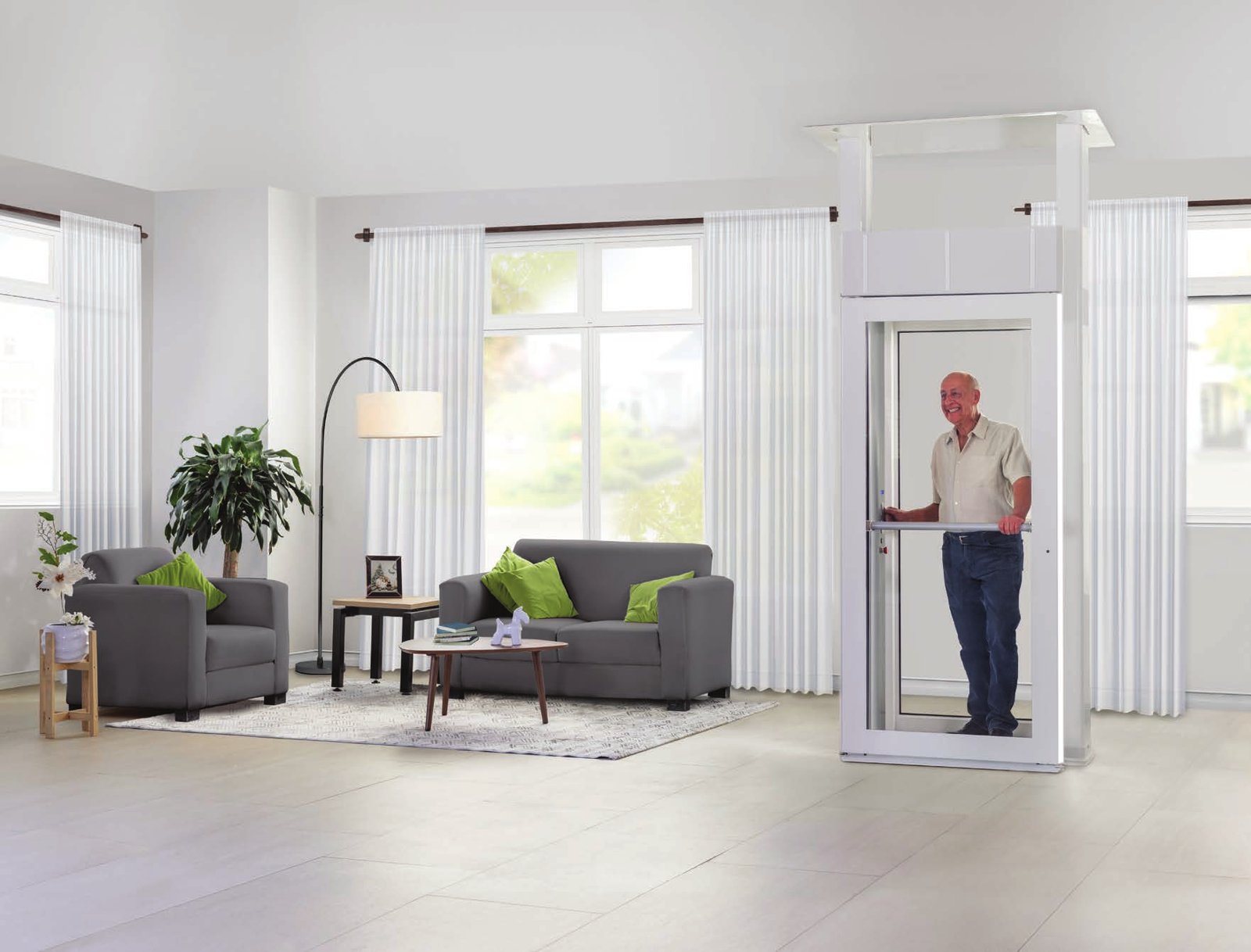
Savaria Luma lift
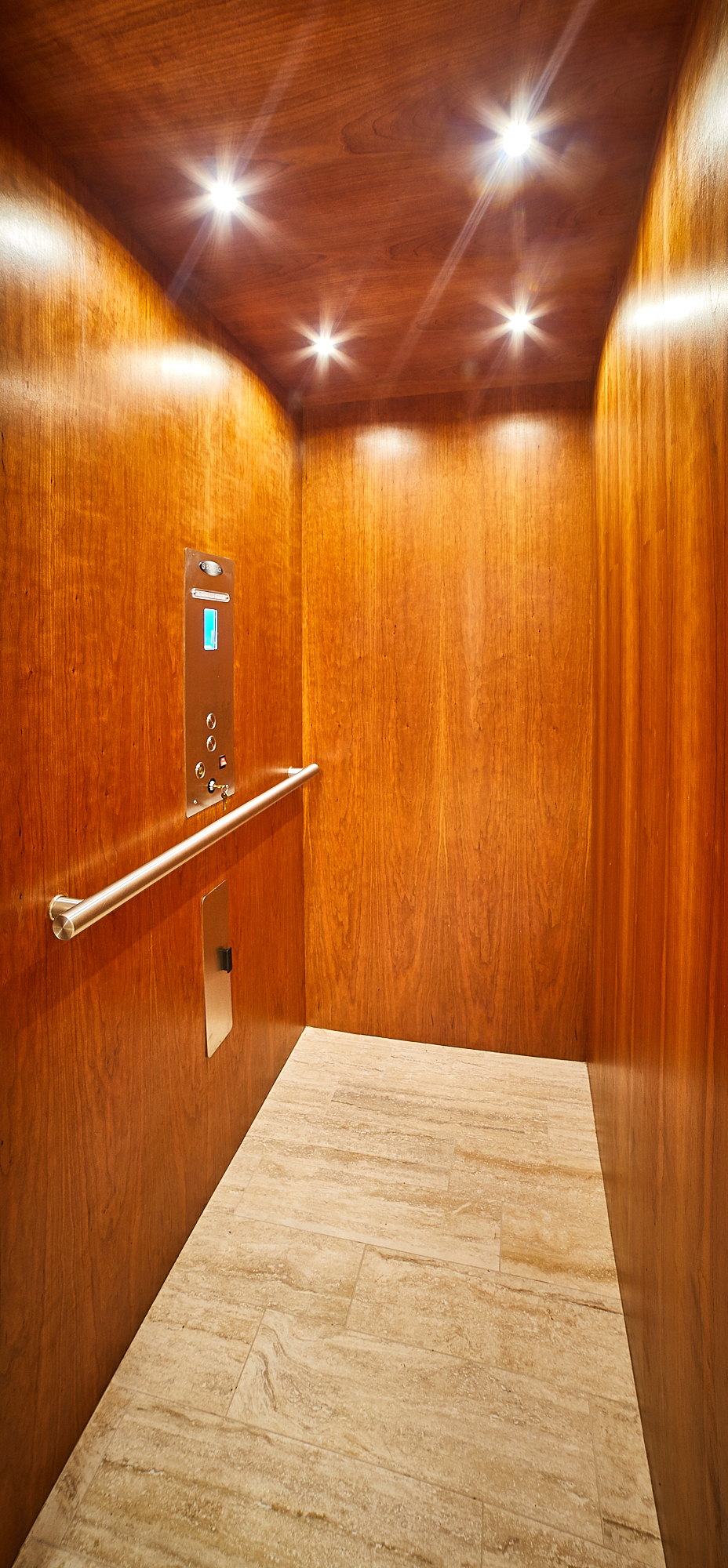
Wood cab elevator
The decision in three parts
The short answer
What we check
What to do next
When is the right time?
There is no age on the calendar. There are behaviors. Watch for a parent who counts the stairs, pauses on every landing, grips the rail with both hands, carries laundry less often, or has moved a bed downstairs. Watch for a parent who stops going to the second floor at all, because that second floor then becomes wasted space and a risk when someone has to go up and check.
The cleanest time to install is when the parent is still steady. They can help choose the finishes, learn the controls without stress, and get used to riding. Installing after a hospital stay is possible, and we do it often, but everything is harder: the family is tired, the decision is rushed, and the parent may be coming home with a walker or a wheelchair.
A useful rule: if your family has had the conversation twice, it is time to price the project. Pricing is free and commits you to nothing.
How to start the conversation
The hardest part is often the parent, not the money. Many older people hear a suggestion about stairs as a message that they are failing. Frame it around what they get to keep: the bedroom they love, the garden they walk out to, the house they have owned for decades.
- Ask, do not tell. Start with how the stairs feel at the end of a long day.
- Pick a calm moment, not the week after a fall.
- Offer to look together. A free visit with a technician who explains things plainly lowers the temperature a great deal.
- Talk about independence. A lift lets a parent stay in the house and keep their routines.
- Bring in the doctor. Many parents will listen to a physician or physical therapist sooner than to a child.
If your parent says no, keep the door open. Many families come back after a close call.
Elevator, stairlift or moving?
A stairlift is the fastest and least disruptive fix for a straight staircase and a parent who can still transfer on and off a seat. It costs far less than an elevator. It does not help if the parent later needs a walker or wheelchair upstairs. Read our stairlift versus home elevator comparison for the full picture.
A home elevator makes sense when stairs are a daily need, when a parent may need a walker or wheelchair, or when two or more people will use the house. It also suits a family that expects the home to stay in the family. Our home elevator models range from compact shaftless units to full-size cabs.
Moving is a real option, and sometimes the right one. A single-level condo or a ground-floor apartment removes the stairs entirely. But moving brings its own cost and its own loss: neighbors, doctors, a lifetime of belongings. One poster on a public forum suggested installing a lift for the years the parents need it and selling the house later. That is a reasonable plan, and some resale thinking is in our resale value guide.
Stairs, falls and safety
Stairs are a common place for falls at home, and every extra trip up and down is another chance for one. A lift cuts the number of those trips to zero. That is the quiet case for an elevator: it is not about convenience, it is about removing a hazard the family cannot supervise around the clock.
Modern units add their own safety features. A battery lowering system brings the car to a landing and opens the door in a power outage on most modern units, and an alarm or emergency phone lets a rider call for help. Door interlocks keep the car from moving when a door is open. We explain what to expect in a stall in our stuck-in-an-elevator guide, and we cover children and grandchildren in child safety.
Ask about the practical side too: floor space for a walker, a door wide enough for a chair, and controls a parent can reach and read. Our wheelchair guide covers sizes.
What a visit from us looks like
We come to the house, usually with the parent and one or two family members present. A technician walks the stairs and the floor plan, looks at where a lift could go, checks the electrical panel and the structure, and asks plain questions about how your parent moves around the house.
You get a clear explanation of the options, including the cheaper ones. If a stairlift suits you better than an elevator, we say so. If an elevator is the right call, we show you which models fit your home, from the compact units to larger cabs. We do not quote prices on the phone. After the visit you receive a written quote, and our cost guide explains what drives it.
The visit is free. There is no pressure. If you are the adult child in another state, we are glad to talk with you by phone and to coordinate with a sibling who lives nearby. For help with the question of who pays, see paying for a home elevator.
Frequently Asked Questions
What are the best home elevators for seniors?
The best one is the one that fits the house and the person: a compact shaftless unit for a straight two-story home, a full-size cab if a wheelchair is likely, or a stairlift if the need is modest. We recommend after a free in-home visit.
When is the right time to install a home lift for aging parents?
Before the first serious fall. Signs include a parent avoiding the stairs, gripping the rail with both hands, or moving a bed downstairs. Installing while your parent is steady gives them a say in the choices.
How do I get aging parents to agree to home modifications?
Frame the change around what they keep, such as their home and independence. Ask questions rather than give orders, pick a calm moment, and offer a no-pressure visit. A doctor or therapist is often more persuasive than a child.
Is climbing stairs good for an 80 year old?
Some stair use can be good exercise for a steady person. But for a parent who is unsteady, short of breath or fearful, stairs are a fall risk, and a doctor or therapist can say what is safe for your parent.
Which is safer, stairs or elevator?
For an older person with balance or strength problems, a properly maintained home elevator removes the risk of falling on stairs. Safety depends on regular service, working door interlocks and battery lowering.
Is a home elevator worth it for aging parents, or should we move them?
It depends on the house, the family and how long your parent will stay. An elevator keeps them in a home they know; a single-level home removes stairs altogether. We will walk through both honestly on a visit.
Talk it through with a technician, not a salesperson
Free in-home visit for you and your parent. Call (833) 865-7887.




