
Stairlift vs Home Elevator: An Honest Comparison
An Honest Comparison
Two ways up the stairs. Which one is right for you?
We sell both, so we have no reason to push one. A stairlift is a seat on a rail. A home elevator is a small room that travels between floors. They solve the same problem for very different budgets, different bodies and different houses, and picking the wrong one is how families end up paying twice.
That is the worry we hear most: what if needs change? A stairlift is cheaper today, but a wheelchair user cannot ride one, and a parent who needs a walker upstairs cannot carry it on a seat. Someone on a public forum put it plainly, saying a stairlift is far more economical to maintain. They are right about upkeep. Another warned that a stairlift may not suit a wheelchair user. Also right. Both facts matter.
This guide compares the two on cost, space, who can ride, upkeep, safety and resale, then tells you when we would pick each. We install Savaria and Handicare stairlifts and Savaria, Stiltz and Cambridge Elevating home elevators. We are a licensed California elevator contractor, CSLB C-11 #1027832, and we quote after a free in-home visit.

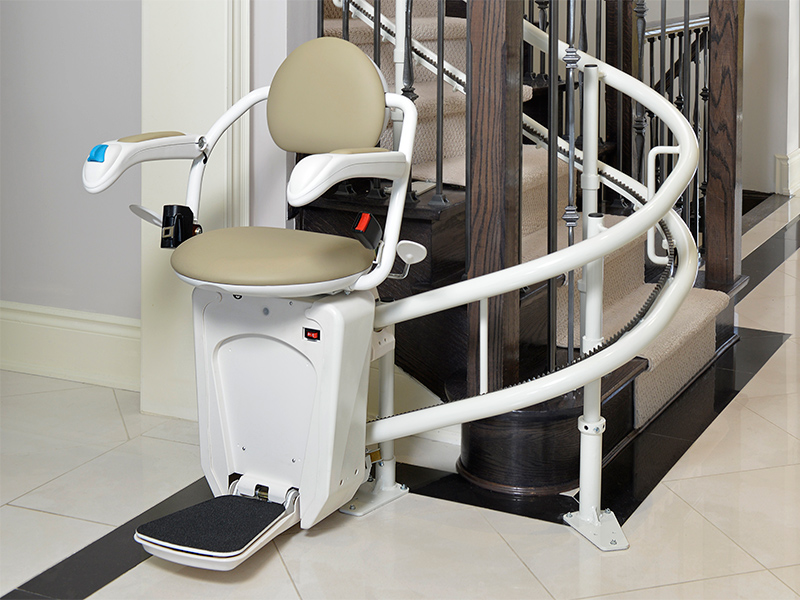
Curved stairlift
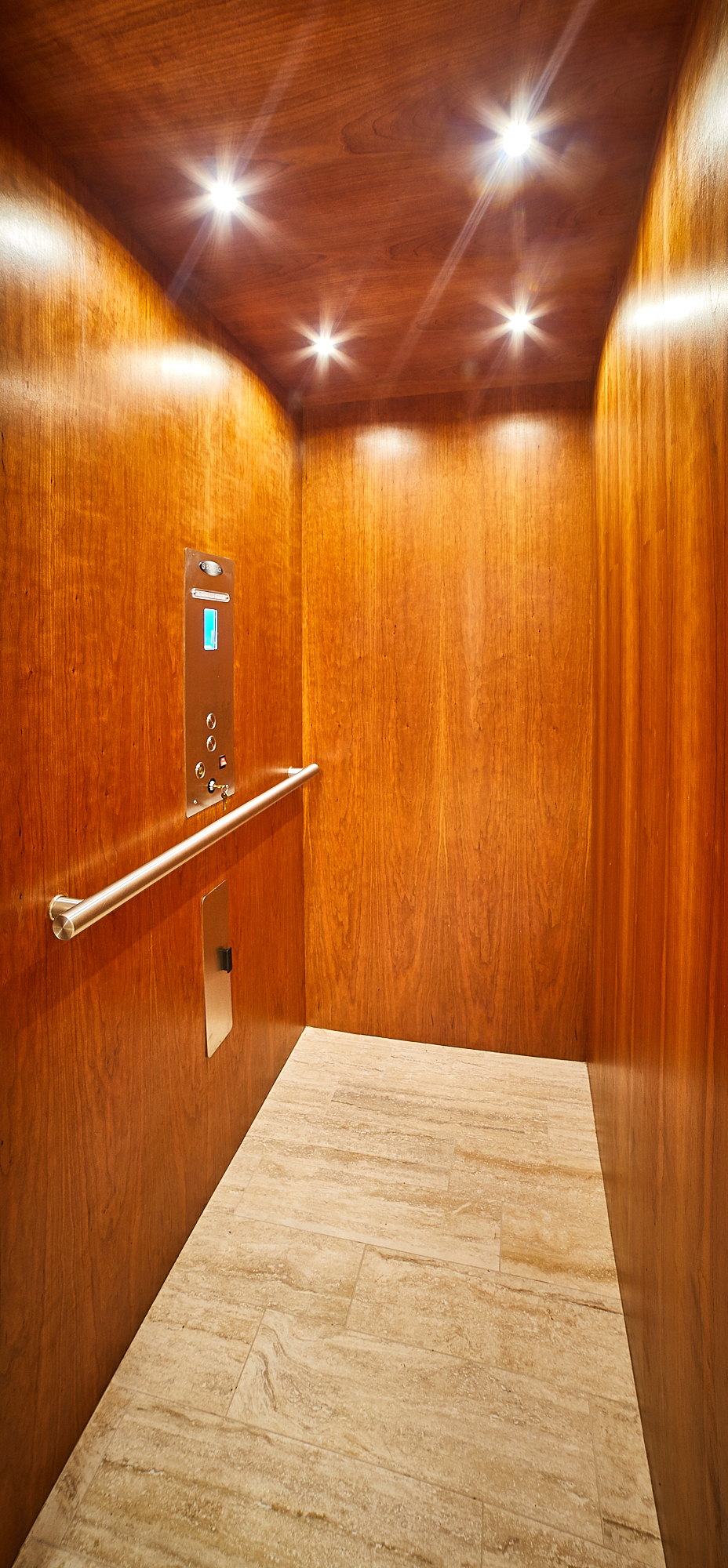
Home elevator cab
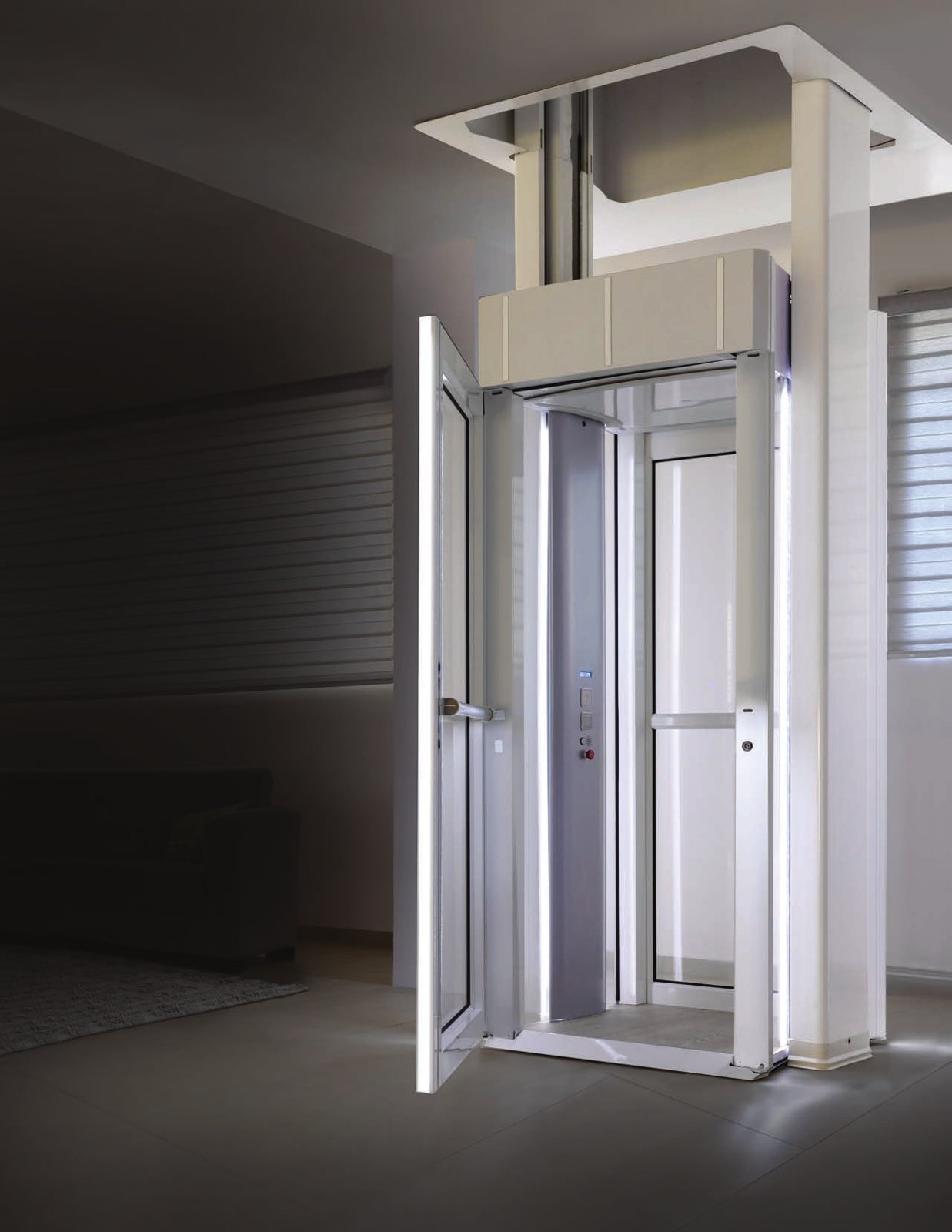
Through-floor lift
Stairlift or elevator in brief
The short answer
What we check
What to do next
What each one is
A stairlift is a motorized chair on a rail fastened to the stair treads. The rider sits, rides to the top, and gets off. It folds up when not in use. Straight rails suit a single flight, and curved rails follow turns and landings. Our stairlifts include the Savaria K2, the Handicare 1000, the Handicare 1100, the curved Stairfriend 23, the Handicare 4000 and the Freecurve.
A home elevator is a cab in a hoistway, with doors on each floor. It carries a person, a companion, groceries, or a walker or wheelchair. Our home elevators run from compact shaftless units to full-size cabs. A through-the-floor lift sits in between: a small cab that rises through an opening cut in the ceiling.
Cost, honestly
A stairlift costs far less than an elevator. That is the main reason people choose one, and for many households it is the right reason. A home elevator costs more because it involves a hoistway, electrical work, finishes and a building permit from your city. We do not publish prices on this page. Every stair and every house is different, and we quote after a free in-home visit. Our cost guide explains what drives the number.
Think in terms of what you will spend over the years you will use it. A stairlift that serves for a short stretch and then comes out may be the better value. A lift your family will use for a long time, or that adds usable floors to the house, may justify the larger cost. Upkeep differs too: a stairlift needs little, and an elevator needs a yearly service visit. See paying for a home elevator for the question of who helps.
Who can ride, and what happens when needs change
A stairlift needs a rider who can get on and off a seat safely, or who has a helper. It carries one person at a time. It does not carry a walker, a wheelchair or a load of laundry; those stay at one end or the other, so you need a second walker or chair upstairs. If balance, strength or memory change, the stairlift may stop being safe.
A home elevator carries a wheelchair, a walker, a caregiver and sometimes two people together. Cab sizes and door widths matter, and our wheelchair guide covers them. Elevators also do not depend on a rider’s balance; they ride the same way for everyone.
If you are not sure which way your needs will go, ask your doctor or therapist, and plan for the likelier outcome. Paying twice is the worst result. See also aging in place.
Space, stairs and the look of the house
A stairlift needs stairs wide enough to leave a clear walking path when the seat is folded up. A rail along the stairs can narrow a tight staircase, and a door at the bottom step may need a hinged or sliding rail. An elevator does not use the stairs at all, but it needs floor space: a stack of closets, a corner of a room or a footprint through every floor. We can often find a spot you had not thought of, and our space guide shows how.
Stairlifts are fast to install and easy to remove. Elevators involve framing, electrical work and finish work, plus a building permit that we coordinate with your city’s building department. An elevator is a more permanent part of the house.
Resale, maintenance and what we would pick
Neither is a sure investment. Buyers’ views on stairlifts vary: some see a need, others see an item to remove. Elevators are split too, and some buyers see a premium feature while others see an expense. Our resale guide goes through both views.
Here is how we would choose. We would recommend a stairlift for a steady rider on one straight flight, on a smaller budget, for a limited period. We would recommend a home elevator when a wheelchair or walker is likely, when several people will use it, when the stairs are curved or long, or when the family intends to stay in the house for years. We would recommend a platform lift for a short rise.
Whichever you pick, keep it serviced. Our maintenance plan keeps an elevator safe, and we service stairlifts too.
Frequently Asked Questions
Which is better for stairs, a chair lift or an elevator?
A chair lift is better for a steady rider on a straight flight with a limited budget. An elevator is better for a wheelchair or walker, more than one rider, or long-term use. We recommend after a free measure.
How much does a stairlift cost compared to an elevator?
A stairlift costs far less than a home elevator. We do not quote prices without seeing your stairs, so the figure comes in a written quote after a free in-home visit.
What are the downsides of having a stair lift?
A stairlift carries one person, cannot carry a wheelchair, takes some stair width, and may stop being safe if balance or strength change. It does little for a person who needs a walker upstairs.
What is the difference between a home lift and a home elevator?
A home lift is a broad term for any lift in a house, including stairlifts, platform lifts and through-the-floor lifts. A home elevator is a cab that runs between floors in a hoistway or enclosure.
Is a through-the-floor lift the same as an elevator?
Not quite. A through-the-floor lift is a small two-stop cab that rises through a floor opening. It is simpler than a full elevator and carries less. Our Telecab and Luma models are examples.
Do stairlifts devalue a house?
Opinions differ. Some buyers see a helpful feature and others see an item to remove. A stairlift is easy to take out, which limits the downside. We cannot predict a buyer’s view.




